How to Use a Concrete Slab Calculator for Accurate Estimations?
Estimating the correct amount of concrete needed for a slab can be challenging. Accurate measurements are crucial for project success. That's where a concrete slab calculator comes in handy. It simplifies the calculation process, reducing the potential for costly mistakes.
Using a concrete slab calculator can boost your confidence in planning. By inputting key measurements, you receive immediate estimations. This tool is especially useful for DIY enthusiasts and professionals alike. It saves time and helps avoid errors in material purchasing. However, it's essential to double-check your measurements before relying solely on the calculator.
Many factors influence concrete needs, including slab thickness and area. Each project is unique, and overestimating or underestimating can lead to issues. Relying only on technology may not always capture nuances. Experience plays a significant role in achieving accurate calculations. Therefore, combine the insights from a concrete slab calculator with your expertise. This blend can lead to more reliable estimations and a better outcome for your concrete projects.

How Concrete Slab Calculators Work: An Overview of Their Functionality
Concrete slab calculators have become essential tools for professionals and DIY enthusiasts alike. These calculators simplify the estimation of materials required for a concrete slab, including length, width, and thickness. By inputting your project’s dimensions, the calculator generates instant results on volume and weight. Recent industry reports indicate that accurate estimations are crucial, as material waste can be as high as 30% in improperly planned projects.
Understanding how these calculators work is key. They typically rely on standard formulas, such as Volume = Length × Width × Thickness. Most tools provide additional features, like converting cubic yards to bags of concrete. With increasing demand for construction and home improvement, reports from the National Ready Mixed Concrete Association show a 4% annual growth in concrete consumption over the past five years. This statistic underscores the need for precise calculations in every project, as errors can lead to significant cost overruns and resource mismanagement.
Nonetheless, not all calculators are foolproof. Many understate factors like moisture content and soil conditions, which can affect the slab's stability. Users should double-check results by consulting with professionals. Relying solely on online tools can lead to oversights, emphasizing the importance of incorporating expert advice for more complicated projects. Accurate preparation minimizes risks, ensuring a solid foundation for any construction endeavor.
Key Measurements Required for Accurate Concrete Slab Calculations
When calculating the amount of concrete needed for a slab, key measurements are crucial. Knowing the length, width, and depth affects your estimates significantly. For instance, if you're pouring a 10x10-foot slab that is 4 inches thick, you'll need 1.25 cubic yards of concrete. This calculation uses the formula: length x width x depth, converted to yards. Accurate measurements ensure that you don’t buy too much or too little concrete.
Consider the moisture and drainage of the site. A saturated area might require additional depth to avoid future issues. Reports indicate that over 20% of concrete projects face complications due to neglecting soil conditions. The importance of subgrade preparation can’t be overstated. Ensure it is compact and level before pouring concrete.
Mind the edges as well, which should bevel or round off for durability. Neglecting this aspect may lead to cracking. It's essential to account for these details in your calculations. Even experienced professionals might overlook these factors, leading to project delays and budget issues. Accurate measurements can save both time and money, highlighting their significance in the concrete pouring process.
How to Use a Concrete Slab Calculator for Accurate Estimations?
| Measurement Dimension |
Value (Imperial) |
Value (Metric) |
| Length |
12 ft |
3.66 m |
| Width |
10 ft |
3.05 m |
| Depth (Thickness) |
4 inches |
10.16 cm |
| Total Volume |
4.0 cu yd |
3.06 m³ |
| Estimated Weight |
10,800 lbs |
4,900 kg |
| Concrete Cost (per cubic yard) |
$150 |
- |
| Total Cost Estimate |
$600 |
- |
Understanding Concrete Volume: Calculating Cubic Feet and Yardage
Understanding the volume of concrete needed for a project is essential. To calculate this, start by measuring the dimensions of the area. You need the length, width, and depth in feet. For cubic feet, multiply these three measurements together. If you have an irregular shape, consider dividing it into manageable sections. Calculate the volume for each section, then add the totals together.
After finding the cubic feet, converting to cubic yards is the next step. One cubic yard equals 27 cubic feet. To convert, divide the total cubic feet by 27. This conversion helps when ordering concrete since most suppliers sell in yards. It’s crucial to account for any waste or spillage. Adding an extra 10% to your estimate can cover these unforeseen issues.
Using a concrete slab calculator can simplify this process. It allows you to input the dimensions and will calculate the total volume for you. Still, be cautious. Relying solely on technology without manual checks might lead to errors. Ensure all measurements are double-checked. Doing so can prevent costly mistakes and ensure your project remains on track. Being thorough in calculations safeguards your investment.
Concrete Volume Estimations Using a Concrete Slab Calculator
This bar chart illustrates the cubic yards of concrete required for slabs of various dimensions. Using a concrete slab calculator helps determine the exact volume needed for your project, ensuring accurate estimations for materials and costs.
Common Mistakes to Avoid When Using a Concrete Slab Calculator
Using a concrete slab calculator can streamline your construction project. However, there are common pitfalls to avoid to ensure accurate estimations. One major mistake is neglecting to measure the area correctly. Many users rush this step and may end up with mislabeled dimensions. A slight error in measurement can lead to significant material waste.
Another common oversight is not accounting for depth variations. Users often assume all areas will have the same thickness. In reality, your slab may require different depths based on its purpose. This could impact overall strength and durability.
Tips: Always double-check your measurements before inputting them. Use a tape measure for accuracy. Consider consulting a professional if you're unsure about estimations. It can save you from errors and unnecessary costs later on.
Additionally, keep in mind any
local building codes. Some areas have specific requirements regarding slab thickness and reinforcement. Failing to adhere to these could lead to
compliance issues.
Lastly, verify the calculator's output carefully. Some calculators might have limitations. Always cross-check your results with alternate calculation methods for
reliability.
Estimating Costs: Factors Influencing Concrete Pricing per Cubic Yard
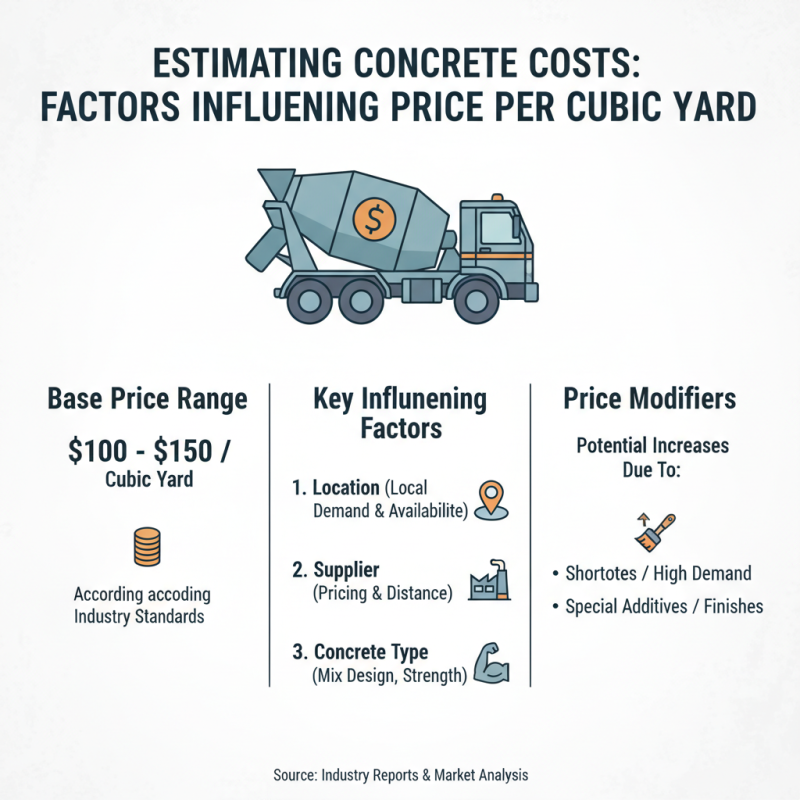
When estimating costs for a concrete project, several factors influence the pricing per cubic yard. According to industry standards, the cost of concrete typically ranges from $100 to $150 per cubic yard. However, this price can vary based on location, supplier, and concrete type. Local demand and availability play significant roles; areas facing shortages may see inflated prices.
Labor costs also contribute substantially to the overall expense. In many regions, labor can amount to 30-40% of the total project cost. Moreover, seasonal factors may affect these rates, as concrete mixing becomes more challenging in extreme temperatures. Projects scheduled during peak construction seasons often face higher pricing due to increased demand.
Type of concrete is another key element influencing costs. Specialty mixes, such as high-strength concrete or decorative concrete, generally cost more. For instance, decorative concrete can increase costs by $10 to $15 per cubic yard compared to standard mixes. Mixing design complexities and additives also add to the price. Understanding these factors is crucial for accurate estimations, ensuring project budgets align with expectations.