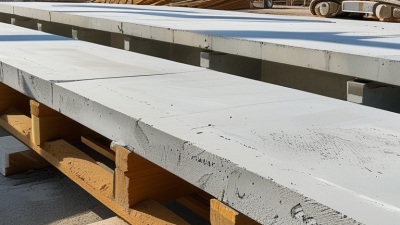
Ordering concrete across borders is not just a price comparison. Mix design, delivery distance, climate, and local testing can change how concrete performs at the job site. A mix that arrives workable in mild weather may stiffen too quickly on a hot, exposed road. Small details matter.
The Global Cement and Concrete Association has estimated that the world uses about 14 billion cubic metres of concrete each year. That scale makes reliable specifications and quality checks essential, not optional. Concrete materials scientist Karen Scrivener has described concrete as “the most widely used material in the world after water.” Her observation captures its reach, but broad use does not guarantee consistent results between suppliers or regions.
When you order concrete mix, start with the actual application: a driveway, foundation, floor, or structural pour. Then confirm strength requirements, aggregate size, slump, admixtures, batch documentation, and delivery timing with qualified technical staff. Ask how the supplier handles sampling and test records. Keep the answers in writing. A clear specification can prevent costly misunderstandings, yet it cannot replace site-specific engineering advice. That distinction is easy to overlook.
These seven tips provide a practical framework for comparing suppliers worldwide. They focus on questions buyers can verify, from mix details to transport planning. No checklist removes every risk. Concrete work still depends on careful coordination, accurate information, and sound judgment at the site.

When ordering concrete across borders, begin with the project use, not a catalog number. A residential footing, bridge deck, warehouse slab, and marine wall require different performance. Ask the site engineer about strength class, exposure, permeability, setting time, and reinforcement congestion. Local standards may describe these requirements differently from international specifications. That difference matters. In practice, I have seen a “standard” mix request cause delays because the supplier and contractor interpreted strength terms differently.
Check the applicable local concrete standard before discussing price or delivery. It may control cement types, aggregate grading, water limits, curing, sampling, and acceptance tests. A qualified local engineer or testing laboratory can confirm the correct specification. Do not rely on a translated datasheet alone. Some details disappear in translation. Request a mix design, recent test results, batch records, and conformity procedures. Confirm the testing age, because seven-day and 28-day results are not interchangeable. Also verify slump retention during transport, especially on remote or hot sites.
7 Tips for Ordering Concrete Mix Worldwide?
Tip 1: Specify the required 28-day compressive strength in MPa, not only a general mix grade. This value should match the intended application, such as a driveway, foundation, column, or suspended slab. A residential slab may need different performance from a heavily loaded industrial floor. Ask a qualified engineer to confirm the design value.
Tip 2: Explain the exposure conditions clearly. Freeze-thaw cycles, coastal air, chemicals, and constant moisture can affect concrete durability. Strength alone does not describe the complete mix. Request details about water-cement ratio, cement content, aggregate size, and air entrainment. These details make international quotations easier to compare. Units can still cause confusion.
Tip 3: Confirm how the 28-day result will be tested and reported. Different regions may use different specimen sizes, curing methods, and testing standards. Request recent laboratory results or project records, but verify that the testing method matches your specification. On-site cubes or cylinders should be sampled carefully, labeled, and cured correctly. Poor handling can create misleading results.
Tip 4: Allow time for strength development. Concrete placed in cold or hot weather may behave differently during early curing. Protect fresh concrete from rapid drying, vibration, and temperature shock. A higher specified strength is not always the best solution; it may increase cost or reduce workability. I have seen orders fail because the strength target was clear, but placement conditions were ignored.
Tip 5: Put every requirement in writing, including delivery temperature, slump, testing frequency, and acceptance criteria. Keep the wording precise. A small wording gap can become a costly site dispute.
| Tip | What to Specify or Confirm | Example Data | Why It Matters |
|---|---|---|---|
| 1. State the required 28-day strength | Give the specified compressive strength, its unit, and the age at which it applies. | 25 MPa (about 3,625 psi) at 28 days | Strength values are meaningful only when the unit and test age are clear. |
| 2. Match strength to the design | Use the value required by the project’s structural drawings, engineer, and applicable local code. | Example options: 20, 25, 30, 35, or 40 MPa (approximately 2,900, 3,625, 4,350, 5,075, or 5,800 psi) | These are example specification values, not universal application limits. The correct strength depends on the design and exposure conditions. |
| 3. Identify the specimen and test standard | Confirm whether the specified result is based on cylinders or cubes and name the required test standard. | For example, cylinder testing under ASTM C39/C39M or cube testing under EN 12390-3 | Specimen geometry and testing procedures differ. Cylinder and cube results should not be treated as directly interchangeable. |
| 4. Specify fresh-concrete requirements separately | State the required slump or slump flow, placement method, and any limits on water addition. | Example: 100 ± 25 mm slump at discharge, subject to project approval | Workability is a separate requirement from compressive strength; adding water on site can affect the mix and its performance. |
| 5. Include aggregate and placement details | Provide the maximum aggregate size and note congested reinforcement, pumping, or other placement constraints. | Example: 20 mm nominal maximum aggregate size for a pump-placed mix, if suitable for the design | Aggregate size and placement conditions influence mix design and the ability to fill the formwork properly. |
| 6. Describe environmental exposure | Tell the supplier about freeze-thaw, de-icing salts, marine exposure, sulfates, or other specified durability conditions. | Example: exterior concrete exposed to freezing and de-icing salts; confirm air-entrainment and durability requirements with the project specification | Meeting a strength value alone does not establish suitability for every exposure. Durability requirements vary by code and environment. |
| 7. Confirm delivery, sampling, and curing arrangements | Agree on quantity, delivery rate, discharge window, sampling responsibility, specimen curing, and acceptance criteria. | Example: record batch and delivery times; test specimens at 28 days using the project’s specified sampling and curing procedure | Consistent handling, sampling, and curing help make test results representative and comparable with the specification. |
Note: Strength conversions are approximate. Confirm the required strength basis, test method, acceptance rules, and durability provisions with the project engineer and the applicable local standard before ordering.
7 Tips for Ordering Concrete Mix Worldwide
Set workability before ordering. Slump testing under ASTM C143, or a recognized local equivalent, gives the crew a practical workability target. It does not measure concrete strength. It shows how easily fresh concrete can be placed and compacted.
Tip 1: State the target slump and tolerance in writing. A qualified technician should sample fresh concrete near the discharge point. The standard test uses a clean cone, three equal layers, and 25 rodding strokes per layer. Lift the cone vertically, then measure the vertical drop in millimeters. Record the result, time, temperature, and truck or batch reference.
Keep the numbers visible.
Tip 2: Match slump to the placement method. Dense reinforcement, narrow forms, pumping, and hot weather may require different workability. Higher slump is not always better. Uncontrolled water addition can increase segregation and reduce durability. If adjustment is needed, follow the approved mix design and local requirements.
Tip 3: Confirm the testing method before international delivery. ASTM C143 may be specified, while another country may use an equivalent standard with different reporting details. Agree on units, sampling points, allowable variation, and who can approve a rejected load. Photos help, but they cannot replace a proper test record.
I have seen teams judge slump by appearance alone. That shortcut is tempting, yet unreliable. A stiff mix may still perform well, while an overly fluid mix may hide problems. Recheck unusual results, especially when the concrete looks different from the previous load. Small communication gaps can become expensive site delays.
Ordering concrete across borders requires clear measurements, not guesswork. Start by calculating the required volume in cubic metres. Multiply length by width and average depth, using metres for every dimension. A slab measuring 8 m by 5 m with a 0.12 m depth needs 4.8 m³.
Use about 2,400 kg/m³ for normal-weight concrete. This means 4.8 m³ weighs roughly 11,520 kg before considering packaging, delivery limits, or site conditions. The figure is practical, but it is not universal. Lightweight and high-density mixes can differ substantially. Ask the supplier for the confirmed density and mix design. Small errors matter.
Add a modest allowance for spillage, uneven ground, and formwork movement. Five to ten percent may be reasonable, although the correct amount depends on the project. I once underestimated an irregular base and had to arrange a second delivery. That delay was avoidable. Check whether the quoted volume refers to batched concrete or estimated placement volume. Confirm cubic metres, truck capacity, delivery timing, access width, and local measurement rules in writing. Keep the calculation sheet. It helps when site conditions change. A final review by a qualified concrete professional is wise, especially for structural work or unusual aggregates.
Calculate volume in cubic metres and use approximately 2,400 kg/m³ as a planning estimate for normal-weight concrete.
How to read the chart: For a 10 m² slab, volume equals area multiplied by thickness. Estimated mass is volume multiplied by 2,400 kg/m³; actual concrete density can vary.
For concrete ordered across borders, a delivery ticket is only the start. Confirm the agreed mix, batch time, truck identification, and arrival time before discharge. ASTM C172/C172M describes how to obtain a representative sample of fresh concrete. Sampling should reflect the concrete being placed, not just an easy scoop from the first discharge. Small details matter.
Take portions from the discharge stream as required by the applicable edition of C172, then combine and remix them. Record the sampling time and concrete temperature, and note any water or admixture added at the site. Keep the sample protected from sun, wind, and contamination. Don’t let it sit while paperwork catches up. A rushed sample can undermine careful testing.
ASTM C39/C39M covers compressive strength testing of cylindrical concrete specimens. Prepare, identify, cure, and transport cylinders according to the project requirements and applicable standards. At the lab, confirm specimen dimensions, test age, and machine calibration are documented with the reported result. Check that the requested test age is clear; a result without that context can mislead. These steps do not guarantee every batch will meet its target, and one test set may not explain a low result. Review sampling records alongside delivery data, placement conditions, and curing history. Verify current standard editions and project specifications before work begins.
Get a personalized quote tailored to your project needs. Request a quote today and let us help you build with passion.
Looking for a concrete contractor you can trust? Fill out the form below to get our recommendations sent to your inbox.