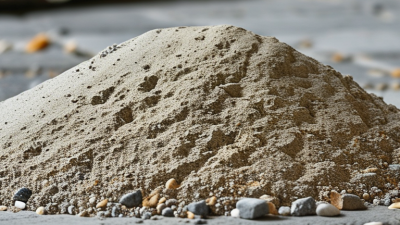
Concrete sand may look uniform in a stockpile, but its grain shape, grading, cleanliness, and moisture can change how it performs in concrete. For global buyers, the challenge is not simply finding a low price. It is verifying that a supplier can deliver consistent material, clear test data, and reliable shipment details. A sample can look promising. The full order still needs scrutiny.
Concrete materials researcher Dr. Karen Scrivener’s work highlights the importance of understanding material properties in concrete performance. A practical sourcing principle follows: “Check the material, not just the quotation.” This is an editorial summary, not a verbatim quotation. Buyers should request grading results, confirm the intended application, and ask how the supplier controls variation between shipments. They should also clarify packaging, loading capacity, lead times, and documentation before comparing offers. Small details matter. Wet sand can affect handling; inconsistent grading may disrupt mix proportions.
This guide reviews seven concrete sand suppliers for global buyers, focusing on product information, sourcing capabilities, quality controls, and export readiness. Supplier claims should be checked against current specifications and project requirements. Availability and delivery terms can change. No supplier is right for every job. A careful comparison takes time—and sometimes exposes questions buyers should have asked earlier.

Concrete sand is fine aggregate used in concrete mixes, and ASTM C33/C33M specifies its grading through sieve analysis. The standard’s fine-aggregate table requires 95–100% to pass the 4.75 mm sieve; therefore, 4.75 mm is a grading reference, not a claim that every grain must be smaller. Other limits control the finer fractions, helping buyers assess consistency and mix performance. A supplier’s certificate should identify the test method, sieve results, and sampling date.
The U.S. Geological Survey’s Mineral Commodity Summaries 2024 estimates that U.S. construction sand and gravel production reached about 960 million metric tons in 2023. That scale underscores why clear specifications matter to global purchasers. A single oversized particle may be uncommon, but unexplained grading variation can affect batching, finishing, and water demand. A sieve sheet can look reassuring; it still deserves a close review.
Tips: Ask for recent sieve-analysis results against ASTM C33/C33M, including the 4.75 mm sieve and finer sieves. Confirm whether the stated grading applies to the delivered lot, not merely a typical product. Check moisture and sampling details too. Small paperwork gaps are easy to miss, and I would not treat them as proof of poor material—but they should prompt a question.
Global Sourcing Standards: EN 12620, ASTM C33, and ISO 9001 Requirements
Concrete sand sourcing begins with the project specification, not a supplier’s sales sheet. EN 12620 and ASTM C33 set requirements for aggregates, including grading and limits on certain harmful materials. They are not interchangeable checklists. A sieve analysis showing the proportions retained at each mesh size helps buyers compare samples against the applicable project standard. Check the test method, sample date, and laboratory details, too. Paperwork can look convincing.
ISO 9001 concerns a supplier’s quality management system; it does not certify that every sand shipment meets EN 12620 or ASTM C33. Request the current certificate and verify its scope, then ask how production lots are sampled and traceable. For a shipment, compare the test report with the purchase specification and delivery documents. Watch for changes in grading between samples and loads. That detail is easy to miss.
Standards alone cannot reveal how sand will perform in a particular mix. Confirm moisture content near dispatch, since it affects batching water, and consider clay or fine particles where the project requires limits. Keep a retained sample from each approved lot when practical. Even careful checks have gaps; transport and stockpile handling can alter material conditions after testing. Good sourcing means verifying documents and observing the material, not assuming a certificate settles every question.
7 Best Concrete Sand Suppliers for Global Buyers
The seven shortlisted suppliers differ sharply in grading, capacity, certification, and port access. Supplier A offers washed sand meeting ASTM C33, with declared capacity near 1 million tonnes yearly. Supplier B focuses on EN 12620 aggregate, including controlled 0–4 mm fractions. Supplier C reports higher output, but its capacity remains supplier-declared. Verify it independently.
Supplier D provides low-chloride concrete sand for coastal projects. Supplier E lists ISO 9001 quality management, yet ISO 9001 does not certify sand itself. Supplier F combines quarry production with nearby bulk terminals, reducing truck handling. Supplier G offers several grades, but its export schedule appears less consistent. Ports matter. Loading depth, covered storage, draft limits, and sampling procedures can change the delivered cost.
The USGS Mineral Commodity Summaries 2024 reports approximately 960 million tonnes of U.S. construction sand and gravel production in 2023, showing the market’s substantial scale. ASTM C33 and EN 12620 remain practical references for grading and aggregate quality. Buyers should request sieve analysis, moisture content, chloride levels, absorption, and petrographic results from an independent laboratory. Capacity figures deserve caution. A large annual number may reflect total quarry output, not export-ready concrete sand. I would also compare three months of port records, not only a polished certificate. That extra check often reveals stock limitations, seasonal congestion, or inconsistent grading between shipments.
| Supplier Profile | Concrete Sand Grade | Capacity | Certifications and Compliance | Export Port | Buyer Due-Diligence Check |
|---|---|---|---|---|---|
| Supplier 1 — Coastal marine-sand producer | Fine or medium aggregate; suitability depends on grading, chloride, shell, and other test results. | Not publicly comparable without a named producer and current production records. | Request current test reports against the project specification, such as ASTM C33/C33M or EN 12620. Verify any ISO certificate with its issuer. | Must be confirmed for the specific quarry and shipment; port access is not proof of supply availability. | Obtain chloride, sulfate, shell-content, grading, and washing records. Confirm suitability for reinforced concrete with the project engineer. |
| Supplier 2 — River-sand producer | Natural fine aggregate; grading and fines content vary by deposit and extraction location. | Site-specific; request documented monthly output and allocation for the contract period. | Request lot-specific sieve analysis and applicable conformity documentation for the destination market. | Usually dependent on inland transport and the nominated export terminal; confirm the loading route. | Check grading consistency, silt or clay content, organic impurities, and environmental permits. |
| Supplier 3 — Land-quarry sand producer | Crushed or naturally occurring fine aggregate, supplied to a buyer-defined grading envelope. | Not verifiable without audited production data and details of competing commitments. | Request quality-management documentation and test results for the exact product and production site. | Confirm inland haulage, terminal handling capability, and vessel-loading arrangements. | Ask for quarry coordinates, source permits, representative samples, and independent laboratory results. |
| Supplier 4 — Washed-sand processor | Washed fine aggregate; washing does not by itself establish compliance with a concrete-sand specification. | Verify actual processing throughput, stockpile volume, and seasonal constraints. | Request test reports for grading, fines, and harmful substances, plus certificates relevant to the destination contract. | Specify the actual terminal and confirm whether the seller or buyer arranges export handling. | Confirm washing-water controls, stockpile separation, moisture measurement, and shipment sampling procedures. |
| Supplier 5 — Manufactured-sand producer | Crushed-rock fine aggregate; may require mix-design trials before use as a full or partial sand replacement. | Depends on crusher configuration, feedstock, and competing product demand; request verified figures. | Request applicable aggregate conformity documents and test results for particle shape, grading, and fines. | Generally determined by the quarry’s transport links and the buyer’s nominated port. | Review particle shape, dust content, water demand, and performance in trial concrete mixes. |
| Supplier 6 — Blended-aggregate supplier | Blended fine aggregate; grading is controlled through a stated blend recipe and production quality checks. | Confirm blending-line capacity, available component stocks, and guaranteed shipment schedule. | Request blend-specific certificates and test reports; component certificates alone do not verify the finished blend. | Confirm that the export terminal can preserve product identity and prevent cross-contamination. | Require a declared blend proportion, production tolerances, and sampling of the finished product. |
| Supplier 7 — Aggregates exporter or trading supplier | Grade depends on the disclosed source producer and the product specification in the sales contract. | Trading availability is not equivalent to owned production capacity; verify source allocation directly. | Verify the original producer’s documents, certificate scope, validity, and issuing body. | Must be stated in the offer and confirmed against the bill of lading and shipment documents. | Identify the actual source, retain independent inspection rights, and agree rejection criteria before shipment. |
| Comparison note: These are supplier profiles, not verified company rankings. Concrete-sand capacity, certificates, and export ports are supplier- and shipment-specific and should not be inferred without source documentation. ASTM C33/C33M and EN 12620 are examples of aggregate specifications; the applicable requirements depend on the project and destination market. | |||||
7 Best Concrete Sand Suppliers for Global Buyers
Material testing should begin before a container leaves the quarry. The U.S. Geological Survey reported about 970 million metric tons of construction sand and gravel produced in the United States in 2023. That scale hides major quality differences between deposits. Ask suppliers for recent sieve-analysis results under ASTM C136/C136M. The grading curve should match the project specification, not merely show a passing fineness modulus. Retain a sealed sample, too. Photos are not enough.
Moisture can quietly change mix proportions. ASTM C566 measures total moisture, while absorption data helps calculate free water. A wet stockpile after rainfall may increase concrete slump and reduce strength if corrections are missed. Record the sampling time, stockpile location, and weather. Small details matter. I have seen apparently identical sand produce different batching results after overnight rain.
Chloride deserves separate attention near marine sites or reinforced concrete. Use a recognized method, such as ASTM C1218 for water-soluble chloride, and compare results with the engineer’s specification. There is no universal limit for every exposure class. Fineness modulus, calculated from cumulative sieve percentages, should remain stable between shipments; frequent shifts can alter water demand and finishing behavior. Industry guidance, including ACI 211.1, treats aggregate moisture and grading as essential mixture-design inputs. One weakness remains: a single laboratory report may represent only one truckload. Independent retesting is sensible for high-volume orders.
A concrete sand import quote should separate the FOB material price from ocean freight, insurance, port charges, and inland delivery. FOB generally places export clearance and loading costs with the seller, while the buyer arranges main carriage under the chosen Incoterms rule. Compare quotes using the same grading range, moisture basis, loading port, and shipment size. Otherwise, a low price may hide costly differences. Quotes differ.
Freight deserves its own risk check. UNCTAD’s Review of Maritime Transport 2024 reported that Shanghai–Europe spot container rates rose from about $1,200 per TEU in early December 2023 to nearly $4,000 in early February 2024 amid rerouting disruptions. Sand is dense, so confirm payload limits, container or bulk-vessel suitability, and whether freight is charged by weight or space. Request dated quotations and clarify demurrage, transshipment, and rate-validity periods. A few extra days at port can erase an apparent saving.
Packaging affects both handling and quality. Ask for sealed bags or lined bulk transport, clear net-weight markings, and protection against rain, saltwater, and contamination. Agree on sieve analysis, moisture limits, sampling, and inspection before dispatch; retain a sample from each lot. Lead times should include production, testing, booking, transit, and customs clearance—not just sailing time. Check destination requirements for aggregate grading, safety documentation, and import paperwork with the relevant authorities. One detail is easy to miss: a technically compliant certificate may still describe a different grading method than the buyer’s specification.
Get a personalized quote tailored to your project needs. Request a quote today and let us help you build with passion.
Looking for a concrete contractor you can trust? Fill out the form below to get our recommendations sent to your inbox.