Choosing among China Best Surface Mounted Light Manufacturers takes more than comparing prices. A reliable supplier should explain how each Surface Mounted Light performs in real spaces, from apartment corridors to retail ceilings. Ask for clear product specifications, sample availability, and details about quality checks. Small details matter. A loose mounting clip can complicate installation, while an unsuitable driver may cause flicker or shorten service life.
A practical comparison begins with light output, color temperature, color rendering, beam angle, and power consumption. Check whether the housing material suits the intended environment and whether the fixture manages heat effectively. Request product drawings, installation instructions, and relevant test documentation. If the project requires dimming or a particular finish, confirm compatibility in writing before ordering. Do not assume that two products with similar wattage will produce the same visual result.
Manufacturer communication also deserves close attention. Ask how samples, production timelines, packaging, and after-sales support are handled. A dependable supplier should answer technical questions clearly and identify limits, not just promise customization. Yet no checklist removes every risk. Specifications can look excellent on paper; a sample may reveal uneven light or a finish that differs from expectation. Comparing several manufacturers and testing a fixture in its intended setting can lead to a more informed decision. This guide introduces useful criteria for evaluating suppliers, while recognizing that the best choice depends on the project, budget, and required performance.
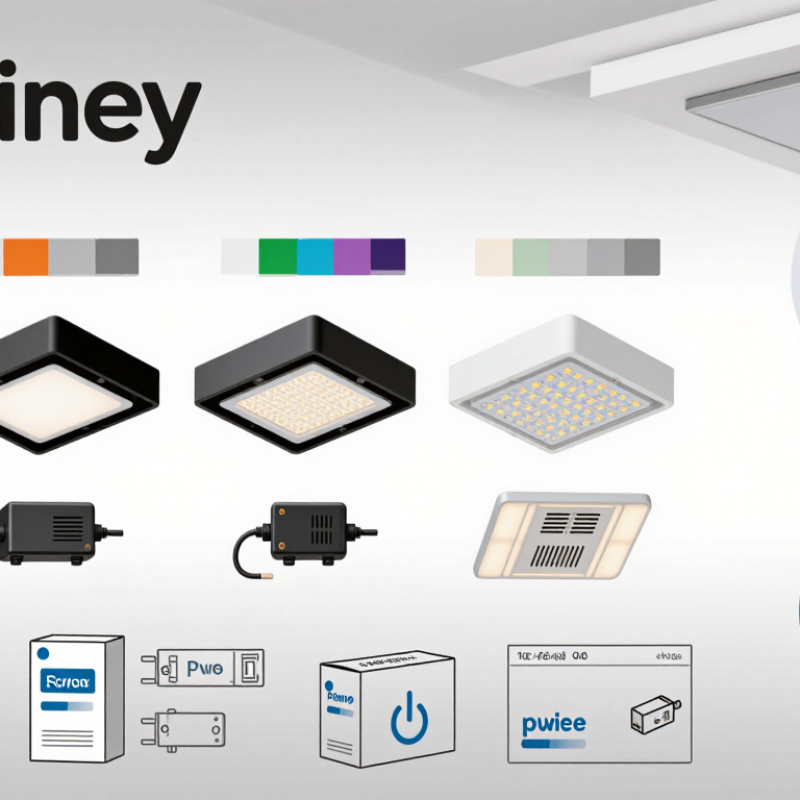
Surface-mounted lights sit directly on a ceiling or wall, without needing a recessed cavity. That makes them useful in concrete buildings, shallow ceilings, and renovated rooms where cutting into the structure is impractical. Their visible housings can also become part of a room’s design. Compact fixtures suit hallways and utility areas, while broader panels can spread light across kitchens or workspaces.
Choose the light for the task, not just its appearance. A narrow beam can highlight a counter, but it may leave dark patches nearby. A diffuser usually softens the light and reduces harsh shadows on faces or tabletops. Check the ceiling material, fixture weight, and available wiring before installation; the mounting surface must support the fitting securely. In bathrooms or covered outdoor areas, confirm that the fixture’s environmental rating matches the location. Details matter.
I have seen neat-looking layouts feel uncomfortable when bright fixtures sit directly in a person’s line of sight. It is worth testing positions before fixing them permanently. Dimming can help, though not every lamp and control work well together. A little planning saves rework.
| Light Type | Typical Power Range | Typical Luminous Efficacy | Common Color Temperatures | Typical Protection Rating | Suitable Applications | Selection Considerations |
|---|---|---|---|---|---|---|
| Surface-Mounted LED Panel | 18–60 W | 90–130 lm/W | 3000 K, 4000 K, 5000 K, 6500 K | Usually IP20 for indoor use | Offices, classrooms, corridors, retail areas, and other spaces requiring broad, even illumination | Check panel dimensions, glare control, ceiling clearance, and whether a surface frame is included. |
| Surface-Mounted Downlight | 5–30 W | 75–110 lm/W | 2700 K, 3000 K, 4000 K, 5000 K | Typically IP20; higher ratings are available for damp locations | Homes, hotel rooms, reception areas, shops, and accent or general lighting | Compare beam angle, glare performance, dimming compatibility, and housing depth. |
| LED Bulkhead Light | 8–40 W | 80–120 lm/W | 3000 K, 4000 K, 5000 K, 6500 K | Commonly IP44–IP65, depending on model | Stairwells, entrance areas, utility rooms, covered outdoor walkways, and service spaces | Confirm the required ingress protection, impact resistance, mounting method, and emergency option. |
| Surface-Mounted LED Batten | 10–80 W | 100–140 lm/W | 3000 K, 4000 K, 5000 K, 6500 K | Often IP20 for dry interiors; IP-rated versions are available | Garages, workshops, warehouses, corridors, kitchens, and back-of-house areas | Review length, light distribution, linking options, operating temperature, and suitability for dusty or damp spaces. |
| Surface-Mounted Linear Light | 20–100 W | 90–140 lm/W | 3000 K, 4000 K, 5000 K | Usually IP20 for indoor applications | Offices, meeting rooms, commercial interiors, and continuous task-lighting layouts | Consider fixture length, diffuser type, glare control, uniformity, and available joining accessories. |
| Surface-Mounted Canopy or Garage Light | 30–150 W | 100–150 lm/W | 4000 K, 5000 K, 5700 K | Commonly IP65 or higher for exposed environments | Parking structures, loading areas, industrial facilities, and covered service zones | Check mounting height, optics, surge protection, thermal management, and local environmental conditions. |
| Note: Values shown are representative ranges for commonly available LED surface-mounted luminaires, not specifications for a particular product. Actual performance varies by design, driver, materials, operating conditions, and test method. Verify product datasheets and applicable safety and photometric certifications before purchase. | ||||||
China’s surface-mounted lighting sector serves homes, offices, shops, and industrial spaces. Its strength lies in combining compact fixtures with broad access to LED modules, drivers, housings, and finishing services. Buyers can often specify beam angle, color temperature, dimming, and mounting dimensions for a project. These options matter when a shallow ceiling cavity or exposed concrete slab limits installation choices. Small details count.
The International Energy Agency’s Energy Efficiency 2023 report says LEDs made up nearly half of global lighting sales in 2022. That shift supports demand for efficient surface-mounted products, but it does not prove every fixture performs well. Buyers should check test reports, driver compatibility, thermal management, and the stated lifetime conditions. A neat housing is not enough. Heat trapped around a driver can shorten service life, especially in enclosed or continuously operated spaces.
China’s manufacturing landscape includes large-scale production and flexible custom-order work, yet supplier capabilities differ. Request photometric files, material details, and sample units before approving a batch. Compare glare control and light uniformity in the actual room, not only in catalog images. One weakness remains: product descriptions may use similar terms while testing methods vary. That deserves scrutiny. Ask how performance claims were measured, and record the answer in the purchase specification.
A capable Chinese surface-mounted light manufacturer should prove performance with model-specific documents, not catalogue photos. Request LM-79 photometric test reports and compare lumen output, efficacy, color temperature, color rendering, and power factor with the product specification. The U.S. Department of Energy reports that LEDs use at least 75% less energy and can last up to 25 times longer than incandescent lighting. The IEA estimates lighting accounts for about 15% of global electricity use. Efficiency claims deserve careful checking.
Photos can mislead. Ask how the factory controls driver sourcing, heat dissipation, and batch consistency. Review aging-test records and confirm that the tested sample matches the model you plan to order. For damp or outdoor locations, verify the stated ingress-protection rating and its supporting test evidence. A factory audit helps, but it cannot replace independent testing. That sounds tidy; real production can be less consistent. Ask how failed units are investigated, how corrective actions are recorded, and how quickly the supplier shares updated test results. These details often reveal more than a polished showroom.
Profiles of leading surface-mounted light manufacturers in China reveal strengths beyond product appearance. Look for evidence of in-house optical design, thermal testing, and consistent production checks. A well-made ceiling fixture should spread light evenly, avoid harsh glare, and keep its housing cool during extended use. Ask suppliers for photometric files, material specifications, and sample test records. Those details make comparisons more useful than catalog photos alone.
The International Energy Agency’s 2023 Global Status Report for Buildings and Construction estimates that building operations account for about 30% of global final energy consumption. The U.S. Department of Energy notes that LED lighting uses at least 75% less energy than incandescent lighting. These figures help explain why efficient surface-mounted products matter, but performance depends on more than the LED chip. Driver quality, heat dissipation, and installation conditions also affect long-term results. A polished profile may still leave unanswered questions.
Tips: Request a sample and inspect its light distribution on a real ceiling. Check warranty terms, production lead times, and customization limits in writing. Compare test data carefully; a missing detail is not proof of poor quality, but it deserves a follow-up question.
China Best Surface Mounted Light Manufacturers
How to Select and Verify a Chinese Lighting Supplier
Choosing a surface-mounted light supplier takes more than comparing prices and catalogues. The IEA’s Energy Efficiency 2017 report estimates that lighting uses about 15% of global electricity and produces roughly 5% of global greenhouse gas emissions. Efficient products matter, but claimed performance needs evidence. Ask for proof. Request an LM-79 photometric test report for the exact model, not a similar-looking fixture. Check that lumen output, wattage, colour temperature, and beam data match your sample.
Review LM-80 data for the LED package and ask how the supplier applies TM-21 lifetime projections. These documents address different parts of performance; neither alone guarantees the finished light’s service life. Inspect the driver label, wiring, mounting plate, and screw finish. A thin plate may flex during installation. Small detail, big signal. Ask whether testing was conducted by an independent laboratory, and verify the report number with the issuing lab.
Check the factory’s production address, quality records, and ability to trace components between batches. Order a sample, then compare its weight, light distribution, and driver temperature with the approved specification. A polished audit file can still miss a weak process. I would not treat a certificate as proof that every shipment is consistent. Record agreed tolerances in the purchase specification, and retain a sample for later comparison.
Suggested evaluation weights (%) for comparing suppliers. This is a practical scoring framework, not market-survey data.
Prioritize compliance and product performance, then verify quality systems and production capability through documents, sample testing, and—where appropriate—a factory audit. For luminaires, check the applicable scope of IEC 60598-1 and relevant IEC 60598-2 requirements, and confirm that certificates and test reports match the exact model being offered.
Get a personalized quote tailored to your project needs. Request a quote today and let us help you build with passion.
Looking for a concrete contractor you can trust? Fill out the form below to get our recommendations sent to your inbox.