
Brass Elbow fittings help plumbing systems turn tight corners without forcing pipes into sharp bends. This can make an installation beneath a sink or inside a cabinet neater. It may also reduce strain on connected lines. Still, choosing a fitting involves more than appearance. Material, connection type, pressure rating, and water chemistry all matter.
Brass is valued for its strength, machinability, and corrosion resistance in many common plumbing settings. Installers may use brass elbows near water heaters, under sinks, or where supply lines change direction. The fitting must match the pipe size and thread standard, and its rating should suit the system. Check the manufacturer’s specifications. Inspect the fitting for cracks, damaged threads, and clear labeling before installation. A solid appearance alone does not confirm compatibility.
This overview explores why brass elbows are commonly selected, where they can perform well, and what limitations to consider. It also covers connection styles and practical steps that help prevent leaks. No fitting suits every job. Water quality, nearby materials, and system requirements can affect the choice. Even experienced installers should verify the details rather than rely on habit. That extra check takes time, but correcting a leak inside a finished wall takes longer.
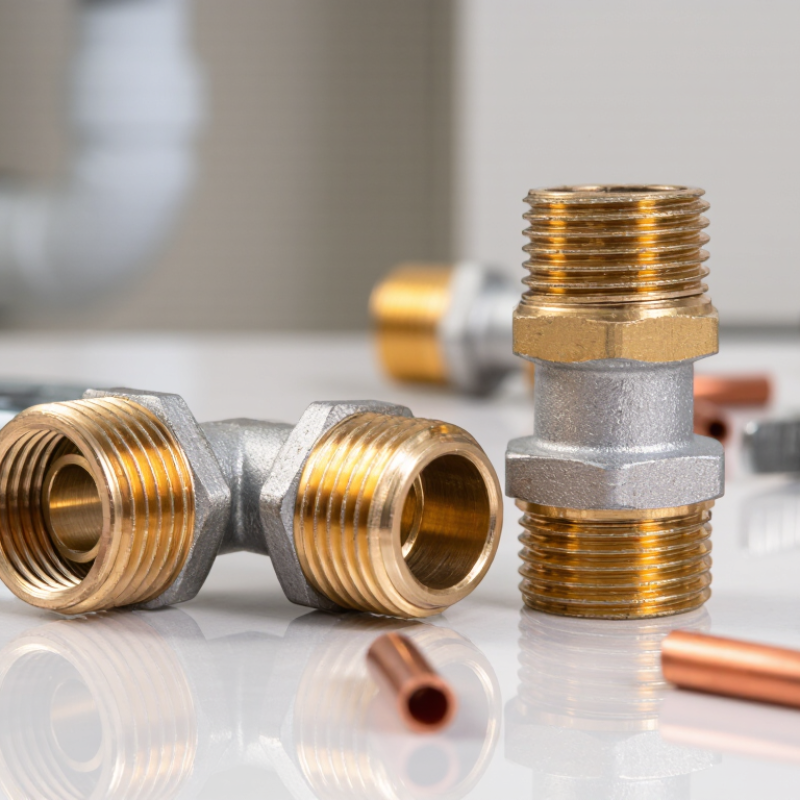
A brass elbow fitting is a shaped connector that changes a pipe’s direction, commonly by 45 or 90 degrees. Its curved passage guides water around corners in supply lines and equipment connections. Brass, a copper-zinc alloy, is often selected for its machinability and durability. The Copper Development Association’s Copper Tube Handbook provides pipe and fitting dimensions used to check compatibility. A fitting that looks sturdy can still be the wrong choice if its thread type or size does not match the pipe.
The bend also affects flow. Crane Technical Paper 410 compares fitting resistance by geometry, using loss coefficients and equivalent pipe lengths. As a general engineering estimate, a smooth 90-degree elbow may have a loss coefficient around 0.3–0.9; tighter or rougher designs can be higher. These are not guaranteed product values. Actual pressure loss depends on flow rate, internal diameter, bend radius, and connection design. Small details matter.
Tips: Check the fitting’s marked size and connection type before installation. Keep the inside passage free of debris, and follow the specified tightening method. A rushed joint can leak later.
A brass elbow turns water around a corner without forcing a straight pipe run. Its curve guides flow through the change in direction. A tight 90-degree bend usually creates more turbulence and resistance than a long-radius elbow. That resistance matters. Crane’s Technical Paper No. 410, Flow of Fluids, describes fitting losses using the coefficient K: head loss equals K multiplied by velocity head. In a simple illustration, K = 1.5 at 1 metre per second gives about 0.076 metres of water head loss. This is an example, not a universal elbow value; actual K depends on fitting geometry and flow conditions.
ASHRAE Handbook tables likewise treat fitting losses as design data, rather than assuming every elbow behaves alike. For a plumber, that means checking elbow radius, bore size, and connection alignment when space is tight. A poorly matched fitting can disturb flow and add pressure loss, especially where several bends sit close together. Brass is also practical to machine and install, but alloy choice and water chemistry matter. Some brasses can suffer dezincification. It is easy to overlook that detail. Choose a fitting suited to the service, and remember that published loss values may not capture every installation imperfection.
Brass suits plumbing elbows because its copper-zinc base can be machined into compact, precise connections. At a sink cabinet, a short elbow can redirect a pipe around a wall or drain without forcing a long rigid run. Brass also tolerates routine handling during installation. A wrench can still damage threads if overtightened, so material choice cannot replace careful fitting. Not all brass behaves alike. Water chemistry and alloy composition affect corrosion resistance, and ASTM B858 provides a test method for assessing dezincification resistance in copper alloys.
For drinking-water connections, alloy composition deserves close attention. The U.S. Environmental Protection Agency defines “lead-free” plumbing products as having a weighted average lead content of no more than 0.25% across wetted surfaces; solder and flux have a separate 0.2% limit. That small percentage matters. Check product documentation for the intended water use, pressure rating, and applicable requirements. Copper Development Association technical resources also distinguish among brass alloys, a useful reminder that “brass” is not one uniform material. An elbow may look solid and well-finished, yet the alloy and connection method still determine whether it suits the installation.
Brass elbow fittings help change a pipe’s direction without requiring a bulky bend in the line. Their compact shape is useful beneath sinks, behind toilets, and inside crowded utility cabinets. A smooth, well-made elbow can also support steady flow by avoiding sharp internal edges. Small details matter.
Brass is valued for its strength and resistance to corrosion in many plumbing applications. It can handle regular temperature changes, and its threads are generally durable during careful installation. That makes a brass elbow a practical choice for connections that may need future servicing. It is not indestructible, though. Excessive tightening can damage threads, and unsuitable water chemistry may affect some brass alloys over time.
The fitting’s material and connection type should match the pipe system and operating conditions. Check the manufacturer’s pressure and temperature ratings, and confirm the alloy is suitable for the water. A reliable seal depends on clean threads, correct sealing materials, and alignment; forcing a crooked connection can create leaks later. For a less familiar installation, ask a qualified plumber to verify compatibility before closing the wall or cabinet. I would not choose by appearance alone.
Choosing a brass elbow starts with the pipe, not the shelf label. Match its nominal size, connection type, and thread standard to the existing line. Measure carefully; a half-inch fitting can still have different thread forms. Fit matters. A mismatch may seem to tighten, then leak under pressure.
Check the elbow’s pressure and temperature ratings against the system’s actual conditions. For drinking-water lines, confirm that the fitting is suitable for that use and meets applicable local requirements. Water chemistry matters, too: some conditions can increase brass corrosion or dezincification. A low purchase price is less useful if the fitting is poorly suited to the water.
Space and installation details deserve attention. A compact elbow may help behind a cabinet, while a larger bend can make access easier. Consider whether you can reach the joint with a wrench and leave room for future repairs. Avoid forcing misaligned threads or overtightening; either can damage the connection. I would not choose by appearance alone. A clean finish is reassuring, but it cannot confirm the right rating or compatibility. After installation, dry the joint and check it again for seepage once the line is pressurized.
| Selection Factor | What to Check | Why It Matters | Practical Guidance |
|---|---|---|---|
| Elbow angle | Common options include 90-degree and 45-degree elbows. | The angle determines how sharply the pipe changes direction and affects installation layout. | Choose the angle that matches the pipe route; avoid unnecessary bends where they could restrict flow or complicate maintenance. |
| Connection type | Check whether the fitting uses threaded, compression, flare, or solder connections. | Each connection style requires compatible pipe ends, tools, and installation methods. | Match the fitting connection to the pipe and system design. Do not assume different connection styles are interchangeable. |
| Thread standard and size | Confirm the nominal size and thread standard, such as NPT or BSP. | Threads that look similar may have different dimensions or profiles and may not seal correctly together. | Verify both the size and standard on the fitting and mating component; use the specified sealing method for the connection. |
| Pressure and temperature rating | Review the fitting’s rated working pressure and temperature for the intended service. | Ratings vary by design, size, alloy, and connection method; the fitting may be the limiting component in a system. | Use the product’s documented ratings at the actual operating temperature. Do not infer a rating from appearance or material alone. |
| Water compatibility | Consider water chemistry, including pH, chloride content, and conditions that may promote dezincification. | Some brass alloys can be more susceptible to corrosion in aggressive water conditions. | For challenging water conditions, check the alloy specification and follow local plumbing requirements; dezincification-resistant brass may be appropriate where specified. |
| Potable-water compliance | Check that the fitting is approved for drinking-water use in the installation location. | Requirements differ by jurisdiction. In the United States, “lead-free” plumbing products are subject to a maximum weighted average lead content of 0.25% on wetted surfaces. | Look for applicable certifications or documentation, such as NSF/ANSI/CAN 61 for health effects and NSF/ANSI 372 for lead content, where required. |
| Material and construction | Confirm the brass alloy, manufacturing quality, and whether the fitting is intended for the application. | Brass is commonly used for plumbing fittings because it is machinable and can provide durable, corrosion-resistant service, but performance depends on the specific alloy and conditions. | Select a fitting designed for the fluid, pressure, temperature, and applicable plumbing code rather than relying on the generic term “brass.” |
| Installation access and maintenance | Consider wrench clearance, joint access, and whether the connection will need future servicing. | A fitting that is difficult to install or reach can increase the chance of poor alignment or make repairs harder. | Plan the pipe route before assembly, support adjoining pipework, and follow the fitting maker’s installation instructions. |
| System compatibility | Check the pipe material, adjoining fittings, and any relevant system requirements. | Joining dissimilar materials may require approved transition fittings or specific installation practices. | Use compatible components and follow local code and manufacturer guidance, especially when connecting brass to other metals or piping materials. |
| Total project cost | Compare the fitting cost with installation time, required tools, and expected maintenance needs. | The lowest purchase price may not represent the lowest overall cost if the connection is unsuitable or difficult to install. | Compare equivalent sizes, connection types, ratings, and compliance documentation before making a price decision. |
Get a personalized quote tailored to your project needs. Request a quote today and let us help you build with passion.
Looking for a concrete contractor you can trust? Fill out the form below to get our recommendations sent to your inbox.