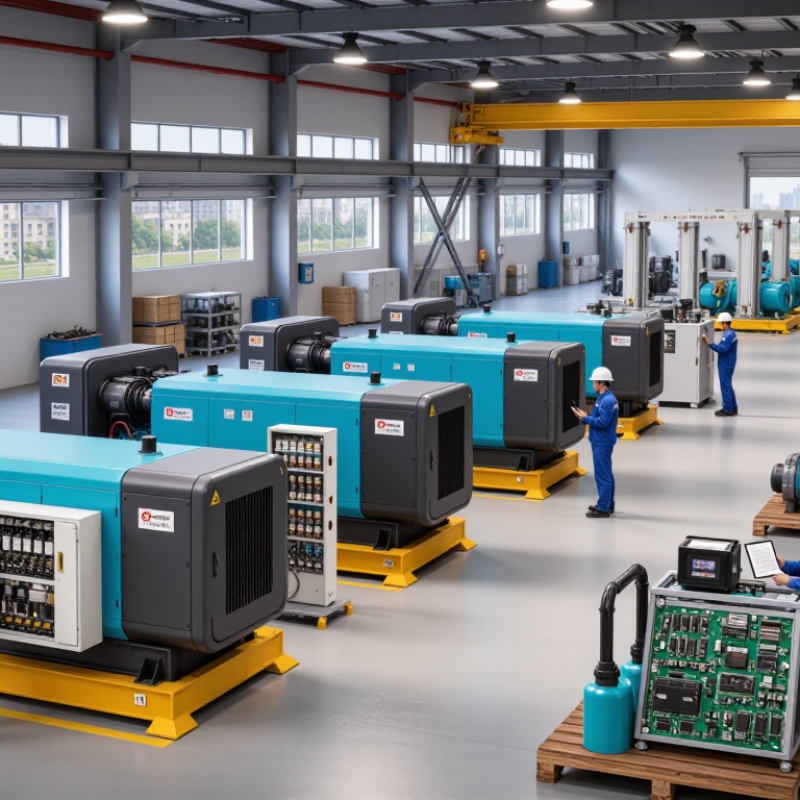
Choosing the best Gas Generator supplier in China requires more than comparing online prices. It demands careful attention to engineering quality, factory capability, and long-term service. A reliable supplier should understand your power requirements, operating environment, fuel preferences, and maintenance expectations. Their recommendations should feel practical, not copied from a standard catalogue.
Experienced buyers often begin by checking the factory’s production records and quality controls. Ask for clear specifications, load-test reports, component brands, and real project references. Examine how the supplier handles noise reduction, fuel efficiency, control systems, and replacement parts. If possible, arrange a factory visit. Look at the assembly area, testing equipment, wiring quality, and documentation process. Small details can reveal large differences. A clean workshop is encouraging, but it is not complete proof.
Supplier verification should also include certifications, export experience, warranty terms, and technical support. Confirm whether engineers can respond quickly after delivery. Ask who pays for defective parts and how emergency service works. Do not rely only on polished videos or confident sales claims. Some suppliers communicate well before payment, then respond slowly afterward. That risk deserves attention. Price matters, but an unusually low quotation may hide weaker components or limited testing. No checklist is perfect. Even careful buyers can overlook communication problems or unclear responsibilities. A balanced decision combines evidence, direct conversations, and realistic expectations. The best partner is not always the largest factory. It is the supplier that consistently delivers safe equipment, honest information, and dependable support.
Before comparing gas generator suppliers in China, define the job clearly. A vague request often produces an unsuitable quotation. Record the required continuous load, peak starting load, voltage, frequency, and phase configuration. Include motors, pumps, compressors, and heating equipment. Their starting demands can exceed normal consumption by several times.
Fuel conditions matter too. Specify the available gas type, pressure range, methane content, and supply stability. If the generator will operate above 1,000 meters, request altitude derating data. Hot, dusty, or humid sites may require stronger cooling, filtration, and enclosure protection. Noise limits, operating hours, installation space, and local emissions requirements should also be documented. Measure twice.
I once underestimated the effect of a compressor’s starting current. The generator passed a basic load test but struggled during real operation. That mistake changed my supplier checklist. I now request load-bank records, transient response data, fuel-consumption figures, and maintenance intervals. Ask whether the supplier can provide wiring diagrams, commissioning guidance, spare-parts availability, and trained service support. Confirm the warranty in writing, including response times and excluded conditions. A supplier should explain assumptions instead of hiding them. Share site photographs and a simple load schedule, but leave room for technical review. The best specification is not always the longest one; it is the one that reflects actual operating conditions.
Before comparing suppliers, define the generator’s continuous electrical load, motor-starting surge, and required nameplate capacity. The examples below use realistic planning values for common commercial applications. Final sizing should be confirmed through a site load study, starting-current assessment, gas-supply verification, and required operating hours.
How to Choose the Best Gas Generator Supplier in China?
Supplier experience should be measured through evidence, not polished website claims. Ask how many years the factory has produced gas generators and which applications it serves. A reliable supplier can explain engine selection, alternator matching, fuel control, cooling design, and load behavior in clear language. Vague answers deserve attention.
Manufacturing capability becomes visible during a factory visit or video audit. Check the welding area, machining equipment, assembly lines, and engine testing room. Look for serial-number tracking, calibrated instruments, incoming-part inspection, and documented quality procedures. Request test records showing voltage stability, frequency response, noise levels, and performance under changing loads. Experienced technicians should demonstrate these tests, not only describe them.
Ask to inspect a sample unit before signing a large order. Review the frame, wiring labels, control panel, exhaust routing, and emergency shutdown system. The supplier should provide installation drawings, operating instructions, maintenance schedules, and spare-parts information. It is also useful to contact recent customers and ask about delivery accuracy, technical support, and failures after commissioning. No audit is perfect. I would still question unusually clean records or a factory that refuses practical testing. A small factory may produce excellent equipment, but limited testing capacity can create avoidable risk. Check twice.
Choosing a gas generator supplier in China requires more than comparing prices. In supplier audits, I examine the generator’s nameplate, engine records, wiring, and protection systems. A clean factory floor helps, but it proves little alone. Ask for recent load-bank test reports, not only factory photographs. The report should show rated output, voltage stability, fuel consumption, noise level, and test duration.
Certifications must match the destination market and the generator’s actual configuration. Request copies of ISO 9001 records, product safety certificates, emissions documents, and applicable conformity declarations. Check the certificate holder, model number, testing laboratory, and validity date. CE marking may support European compliance, but it is not a universal quality guarantee. Other markets may require different approvals. Confirm this with an independent compliance specialist when the project carries serious risk.
Traceability matters. Reliable suppliers can link each unit to engine serial numbers, inspection records, wiring diagrams, and replacement-part lists. Ask whether technicians perform insulation, grounding, emergency-stop, and overload tests before shipment. Small gaps appear here. A supplier may provide excellent paperwork but weak after-sales training. I have seen buyers overlook spare filters, local service response, and warranty exclusions. That mistake becomes expensive during a night outage. Visit the production site if possible, speak with a working technician, and inspect a running unit under realistic load. Photos are not enough.
Choosing a gas generator supplier in China requires more than comparing the lowest quotation. Low price is tempting. Request a detailed cost sheet covering the generator, control panel, shipping preparation, installation guidance, and spare parts. Compare equal power ratings and fuel consumption figures. A cheaper unit may use less durable components or exclude essential accessories. Ask how the supplier verifies performance before shipment. A factory test report should include output voltage, frequency stability, noise levels, and load results.
Warranty terms reveal the supplier’s real confidence. Check the coverage period, starting date, labor responsibility, and excluded parts. Ask whether the warranty remains valid after local installation. Some agreements sound generous but exclude batteries, sensors, wiring, or damage caused by unstable fuel. Get every promise in writing. Technical support matters after delivery. Confirm response times, service languages, diagnostic procedures, and remote troubleshooting options. Ask whether technicians can guide your team through fault-code checks by video.
Reliable suppliers should provide manuals, wiring diagrams, maintenance schedules, and recommended spare-part lists. Request customer references for similar climates and operating loads. A practical test is to ask for help with a realistic issue, such as low oil pressure during startup. The quality and speed of the reply are revealing. I once focused too heavily on purchase price and underestimated training costs. That mistake changed my evaluation method. Still, no checklist is perfect. Local service availability can be difficult to verify, so allow time for independent inspection and careful follow-up.
| Evaluation Dimension | Typical Market Benchmark | What a Competitive Supplier Should Offer | Key Verification Documents | Buyer Risk if Not Confirmed |
|---|---|---|---|---|
| Indicative Equipment Price | Approximately US$3,000–6,000 for a basic 20 kVA unit; US$8,000–16,000 for a basic 100 kVA unit; and US$35,000–65,000 for a basic 500 kVA unit. | A detailed quotation showing the generator, gas train, controller, alternator, radiator, enclosure, control panel, testing, packing, and excluded items separately. | Formal pro forma invoice, technical configuration sheet, bill of materials, and Incoterms such as EXW, FOB, or CIF. | A low headline price may exclude the gas regulator, synchronization panel, commissioning, spare parts, or required safety equipment. |
| Fuel Gas Requirements | Many natural-gas sets require a stable gas supply within the engine manufacturer's specified pressure, methane number, and calorific-value range. Requirements differ by engine and model. | Clear limits for gas pressure, methane number, hydrogen sulfide, moisture, contaminants, and allowable gas-composition variation. | Gas-quality specification, fuel-consumption curve, gas-pressure requirement, and approved gas-train diagram. | Incorrect gas quality can reduce output, increase maintenance, cause knocking, or invalidate the warranty. |
| Rated Output and Efficiency | Electrical efficiency commonly falls within roughly 30%–42% for many industrial natural-gas generator packages, depending on engine size, load, and operating conditions. | Guaranteed electrical output at the required ambient temperature, altitude, gas quality, and power factor, supported by a test report. | Performance data sheet, load-bank test report, fuel-consumption curve, and derating chart. | Nominal kVA may not be available at the actual site conditions, especially at high altitude or elevated ambient temperature. |
| Warranty Duration | The most common commercial structure is 12 months from commissioning or 18 months from shipment, whichever occurs first. Some suppliers offer 24-month coverage for selected components. | At least a clearly defined time limit, operating-hour limit, covered components, labor terms, and exclusions. | Signed warranty certificate, warranty claim procedure, exclusions list, and commissioning record requirements. | Unclear start dates or operating-hour limits can shorten effective coverage for standby systems that are shipped long before installation. |
| Warranty Scope | Standard coverage generally addresses manufacturing defects in the generator package. Consumables, incorrect installation, poor gas quality, and normal wear are commonly excluded. | Explicit treatment of the engine, alternator, controller, radiator, gas train, batteries, turbocharger, and replacement-part freight. | Component-by-component warranty matrix and service responsibility statement. | Critical components may be excluded even when the quotation is advertised as having a “full warranty.” |
| Production Lead Time | Common lead times are approximately 4–8 weeks for standard configurations and 8–16 weeks for synchronized, containerized, or customized projects. | A production schedule with design approval, factory testing, packing, and shipment milestones. | Order confirmation, manufacturing schedule, factory acceptance test plan, and delay-liability clause. | Unplanned delays may affect installation dates, import permits, and project financing. |
| Factory Acceptance Testing | A basic test may include no-load checks, voltage and frequency verification, alarms, shutdown functions, and a load test. The depth of testing varies considerably. | Witness or recorded testing at defined loads, including voltage stability, frequency stability, protection functions, fuel consumption, and noise where applicable. | FAT procedure, signed test report, calibration certificates, and photographs or video of the tested unit. | Unverified performance problems may only become visible after delivery and installation. |
| Remote Technical Support | Professional suppliers should provide support during working hours and a documented escalation process for urgent shutdown or commissioning issues. | Named technical contacts, response targets, troubleshooting checklists, wiring diagrams, manuals, and remote diagnostic support. | Support policy, contact list, service-level commitment, installation manual, and controller software instructions. | Slow troubleshooting can extend downtime and increase the cost of local engineering support. |
| On-Site Commissioning | Commissioning may be included, optional, or charged separately. International travel, accommodation, local labor, and site preparation are often excluded. | A written scope covering gas-line inspection, startup, load testing, operator training, protection verification, and handover documentation. | Commissioning quotation, site-readiness checklist, training agenda, and signed commissioning report. | Improper startup or synchronization settings may create safety issues and can affect warranty validity. |
| Spare Parts Availability | Routine filters, belts, sensors, gaskets, and service kits are normally easier to source than major engine or controller components. | A recommended two-year spare-parts list, stated availability period, prices, part numbers, and dispatch time. | Spare-parts catalogue, maintenance schedule, stock statement, and parts quotation. | Long replacement times for sensors, control modules, or ignition components can cause prolonged downtime. |
| After-Sales Service Network | Coverage varies by destination. Some suppliers rely on remote support and independent local technicians rather than permanent overseas branches. | Verified local service partners or a clear plan for international service visits, training, and parts delivery. | Service-partner details, technician qualifications, reference projects, and response-time commitment. | Travel costs and response times may be substantially higher than expected if no local support exists. |
| Documentation Quality | A complete package should include operation and maintenance manuals, wiring diagrams, parts lists, certificates, test reports, and installation requirements. | Documents supplied in English, with consistent model numbers and revision-controlled drawings. | Sample manual, single-line diagram, wiring diagram, foundation drawing, packing list, and conformity documents where applicable. | Incomplete documentation can delay customs clearance, installation, operator training, and future maintenance. |
| Payment and Commercial Terms | International equipment orders commonly use a deposit followed by balance payment before shipment or against agreed shipping documents. The exact structure is negotiable. | Milestone payments linked to design approval, factory acceptance testing, and shipment, with all bank charges and taxes clearly allocated. | Sales contract, payment schedule, Incoterms, tax statement, packing terms, and delay or cancellation provisions. | Front-loaded payment terms increase financial exposure before the equipment has passed inspection. |
| Overall Selection Priority | Price should be assessed together with lifecycle cost, fuel consumption, warranty value, parts availability, commissioning quality, and expected downtime. | Select the supplier that provides the clearest technical scope, measurable warranty commitments, verifiable testing, and dependable support—not simply the lowest initial quotation. | Completed supplier-comparison sheet, reference checks, FAT records, contract, warranty, and service-level documents. | Choosing only on purchase price can result in higher fuel, maintenance, installation, and downtime costs over the generator's operating life. |
A reliable gas generator supplier should prove performance before asking for a large order. Request a sample unit or a witnessed factory test. Check its starting time, voltage stability, fuel consumption, noise level, and behavior under changing loads. Ask for test records with dates, equipment details, and measured results. A clear sample process reveals more than attractive sales claims.
Inspect the sample carefully. Look at welds, cable labels, control-panel wiring, and access to filters. Ask whether the supplied engine, alternator, and controller match the tested configuration. Small differences can affect maintenance and output. Request photos during assembly, not only polished product images. If possible, use an independent technician to review the sample. This adds cost, but it can expose weak workmanship early.
References should come from customers with similar power requirements and operating conditions. Ask how long the generators have run and how quickly the supplier handled faults. Request permission to speak with two or three users directly. Confirm delivery accuracy, spare-parts availability, and after-sales response times. One reference is not enough. Some feedback may be overly positive. Compare several accounts, and accept that no supplier will have a flawless record. A missing document or delayed reply deserves careful attention before signing.
Get a personalized quote tailored to your project needs. Request a quote today and let us help you build with passion.
Looking for a concrete contractor you can trust? Fill out the form below to get our recommendations sent to your inbox.