What is a Concrete Volume Calculator and How to Use It Effectively
A concrete volume calculator is an essential tool for anyone involved in construction, landscaping, or DIY projects that require precision in concrete mixing and pouring. Understanding how to effectively use a concrete volume calculator can save time, reduce material wastage, and ensure that your projects are completed accurately. Whether you're pouring a driveway, creating a foundation, or building decorative structures, the ability to determine the correct volume of concrete needed can significantly impact the success of your project.
In this introduction, we will explore what a concrete volume calculator is, how it operates, and why it is vital to incorporate this tool into your planning process. By knowing the dimensions of your intended pour, a concrete volume calculator can help you quickly calculate the amount of concrete required in cubic yards or cubic meters. This not only aids in budgeting for materials but also helps avoid the common pitfalls of over-ordering or under-ordering concrete, both of which can lead to delays and additional costs.
Ultimately, utilizing a concrete volume calculator effectively will empower you to approach your concrete projects with confidence. By mastering this tool, you can ensure that your construction efforts are both efficient and effective, allowing you to achieve the desired results with minimal hassle and maximum precision.

Understanding the Concept of a Concrete Volume Calculator
A concrete volume calculator is an essential tool for contractors, engineers, and DIY enthusiasts involved in construction projects. Its primary function is to determine the amount of concrete needed for a specific structure, which is crucial for both budgeting and resource management. According to industry data, an accurate estimation of concrete requirements can reduce waste and save costs by up to 20%. The formula for calculating concrete volume typically involves measuring the length, width, and height of the area to be filled, which can then be applied to various shapes such as slabs, cones, or cylinders.
To utilize a concrete volume calculator effectively, it's important to understand the different measurements involved. For standard rectangular areas, the formula is straightforward: volume equals length × width × depth. For more complex shapes, such as a cylinder, one would need to apply the formula for the volume of a cylinder (πr²h). Furthermore, relevant reports from the American Concrete Institute indicate that the concrete industry has seen a steady growth, with the demand for ready-mixed concrete projected to increase by 4% annually through the next five years. This underscores the importance of precise calculations in meeting construction demands and optimizing material use in the ever-expanding construction landscape.
Key Features and Functions of Concrete Volume Calculators
Concrete volume calculators are essential tools in the construction industry, enabling users to accurately estimate the amount of concrete required for various projects. These calculators simplify complex calculations by taking into account specific measurements such as length, width, and depth of the area to be filled. According to a report by the American Concrete Institute, improper estimates can lead to over- or under-buying concrete, resulting in significant waste or delays that can raise project costs by up to 15%.
One of the key features of a concrete volume calculator is its ability to handle different shapes and types of projects, from rectangular slabs to circular footings. Advanced calculators also offer functionalities for determining the required material for specific concrete mixtures, including variations in density and additives. For example, a study by the Portland Cement Association found that using the right mix design can improve durability by 30% while optimizing resource usage. This flexibility is crucial as it allows contractors to create precise estimates tailored to the needs of their projects, promoting efficiency and sustainability in construction practices.
Concrete Volume Calculator Data
| Parameter |
Value |
Unit |
| Length |
10 |
meters |
| Width |
5 |
meters |
| Height |
0.15 |
meters |
| Volume |
7.5 |
cubic meters |
| Concrete Density |
2400 |
kg/m³ |
| Total Weight |
18000 |
kilograms |
Step-by-Step Guide to Using a Concrete Volume Calculator
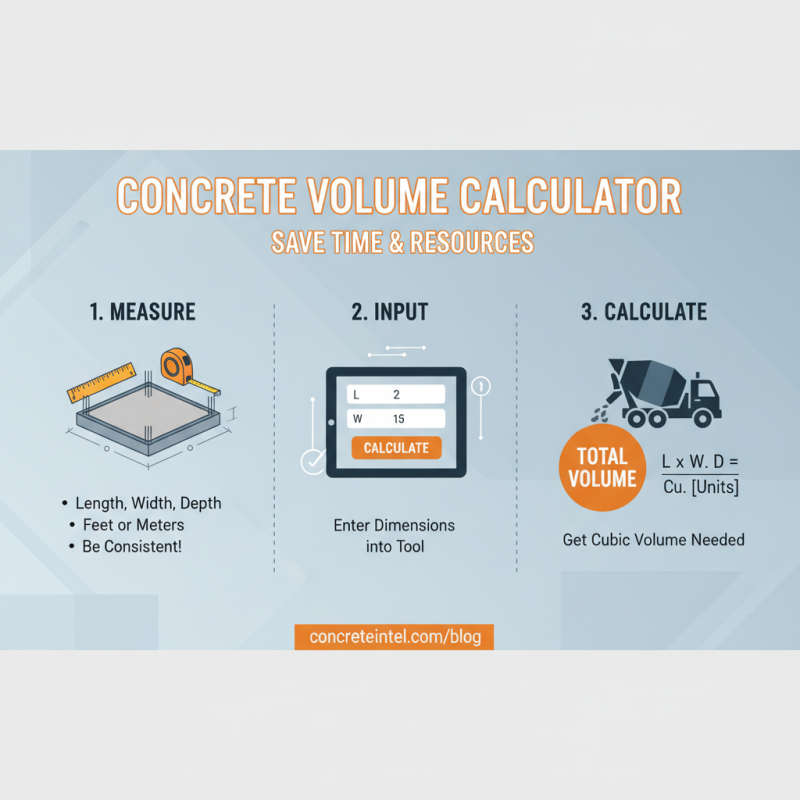
Using a concrete volume calculator is a straightforward process that can save you both time and resources when planning a construction project. To effectively utilize this tool, start by determining the dimensions of the area where you plan to pour concrete. Measure the length, width, and depth in either feet or meters, as consistency is key for accurate calculations. Once you have these measurements, input them into the calculator. The tool will typically use the formula for volume (length x width x depth) to provide you with the total cubic volume of concrete required.
Tips: Always double-check your measurements before inputting them into the calculator. Even a small error can lead to significant waste or shortages. Additionally, when calculating for irregular shapes, consider breaking them down into simpler geometrical sections. This approach will ensure that you get a more accurate total volume.
After obtaining the volume, factor in any additional needs such as overage for spillage or specific project requirements, like adding reinforcement materials. This step is crucial for ensuring that you order enough concrete to complete the job without delays. Keeping these tips in mind can enhance the effectiveness of your concrete volume calculations and streamline your project planning.
Common Mistakes to Avoid When Calculating Concrete Volume
When working with concrete volume calculations, it is essential to avoid common pitfalls that can lead to inaccurate estimates and increased costs. One of the most frequent mistakes is underestimating the required volume for a project. According to industry data, up to 15% of concrete is often wasted due to miscalculations, leading to excessive expenses and project delays. Additionally, not accounting for various factors such as different shapes, sizes, and types of pours can significantly skew the results.
Another prevalent error is neglecting to consider the concrete’s shrinkage and settling over time. Studies indicate that concrete can shrink approximately 0.1% to 0.2% in volume, depending on environmental conditions. This shrinkage can result in a need for additional concrete to fill gaps and achieve the desired structural integrity. Properly using a concrete volume calculator involves not only inputting precise dimensions but also factoring in these dynamics to ensure that the project stays within budget and meets quality standards. By understanding these common mistakes and accounting for them, users can more effectively utilize concrete volume calculators and enhance their project outcomes.
Concrete Volume Calculation by Material Type
This chart represents the volume of materials used in a concrete mix calculation. Each bar indicates the volume in cubic meters for cement, sand, gravel, and water. Properly calculating concrete volume is crucial for avoiding wasted materials and ensuring structural integrity.
Tips for Maximizing Accuracy in Concrete Volume Calculations
When working with concrete, precision is critical to ensure structural integrity and cost-effectiveness. An effective
concrete volume calculator can help you determine the exact amount of concrete needed for your project, reducing waste and ensuring that your calculations are spot on. However, to truly maximize the accuracy of your concrete volume calculations, there are several tips to keep in mind.
First, always double-check your measurements before entering them into the calculator. According to the American Concrete Institute, even minor errors in dimensions can lead to significant discrepancies in volume, which can cost contractors thousands of dollars in excess material. Use a reliable measuring tool and ensure you account for all relevant dimensions, including thickness for slabs or depth for footings. This attention to detail can lead to more precise volume estimates.
Second, consider the characteristics of the materials involved. Concrete density can vary based on the mix design and the type of aggregates used, impacting the volume needed for your project. The National Ready Mixed Concrete Association reports that variations in aggregate size can alter the total volume of concrete. Therefore, understanding your specific mix’s characteristics and inputting accurate density values into the calculator will help ensure that your calculations are as accurate as possible. When in doubt, consult industry guidelines or seek expert advice to validate your calculations.