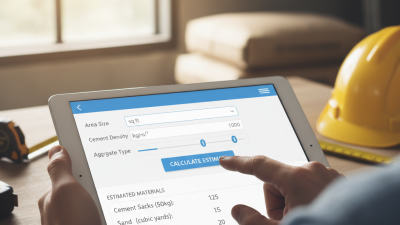
How to Use a Cement Needed Calculator in 2026?
A cement needed calculator can turn a rough project idea into a practical material estimate. In 2026, these tools are useful for planning patio slabs, walkways, footings, and small repairs. Enter the dimensions, choose the correct units, and check what the calculator actually measures. Some estimate cement bags; others calculate concrete volume, which includes cement, sand, and aggregate. That difference matters.
Measure carefully. A slab measuring 10 feet by 12 feet and 4 inches thick needs consistent units and a realistic depth. Small errors add up. The calculator is only as dependable as its inputs. Check the result against the product label, because bag coverage and mix proportions can vary. Always worth checking.
This guide explains how to use a cement needed calculator, interpret its result, and account for practical details such as uneven ground, formwork, and a modest allowance for waste. It also clarifies when a calculator estimates cement alone and when it estimates ready-mix concrete. Those are not interchangeable quantities. For structural work or unusual site conditions, confirm the design and material requirements with a qualified professional or supplier. A calculator helps you plan; it does not inspect the ground or guarantee a sound pour. I have seen estimates look precise while relying on a guessed thickness. That is a useful reminder: verify the measurements before ordering, and treat the answer as an estimate, not a promise.
Define Project Dimensions and Convert Measurements to Cubic Feet or Meters
How to Use a Cement Needed Calculator in 2026?
Define Project Dimensions and Convert Measurements to Cubic Feet or Meters
A cement needed calculator starts with accurate project dimensions, not a guess from a material pile. Measure length, width, and depth in the same unit. For a slab, multiply these three figures to find volume. A 12-foot by 10-foot slab, 0.5 feet deep, requires 60 cubic feet of concrete. Convert cubic feet to cubic yards by dividing by 27. For metric work, multiply meters directly to obtain cubic meters.
Small errors become expensive. A depth difference of one inch can change the required volume noticeably across a large driveway. I measure several points because ground levels rarely behave perfectly. Then, I add a practical waste allowance, commonly 5% to 10%, depending on access, formwork, and placement conditions. Too much allowance wastes money. Too little creates a dangerous delivery gap.
The calculator should distinguish concrete volume from cement content. Concrete includes cement, water, sand, and coarse aggregate. The final cement mass depends on the specified mix design, strength class, and moisture conditions. The U.S. Geological Survey’s Mineral Commodity Summaries 2024 estimated global cement production at about 4.1 billion metric tons in 2023. That scale shows why precise measurement matters. Entering feet into a meter-based calculator is a common failure. Recheck every unit. A qualified technician should verify structural requirements before ordering materials.
Select Concrete Strength and Cement Content Using ACI 211 Mix Guidelines
A cement needed calculator is most useful after you choose the concrete’s required strength and conditions. Under ACI 211 mix-proportioning guidance, start with the specified compressive strength, exposure, and placement needs. The required average strength may need to exceed the specified value to allow for production variability. Strength is not a direct cement-bag setting. A calculator estimates proportions; it does not replace a trial batch.
Use the selected strength and durability requirements to establish a suitable water-to-cementitious-materials ratio. Then estimate mixing water from slump, aggregate size, and air content. Dividing water mass by the chosen ratio gives an initial cementitious-materials quantity. For example, a lower ratio usually means more binder for the same water amount. If the mix contains supplementary cementitious materials, account for their share rather than treating all binder as Portland cement. Aggregate moisture matters, too. A damp stockpile can change the actual batch water, so field adjustments are essential.
Tips: Enter the strength in the correct units. Check exposure limits and intended slump. Compare the calculator’s cement estimate with ACI-based proportions, then verify using trial batches and measured test results. Small errors add up. I would still review the assumptions carefully; calculators can make uncertain inputs look precise.
Calculate Cement Bags from Volume, Density, and 50-kg or 94-lb Bag Sizes
A cement needed calculator turns measured volume into an estimated bag count. Enter the cement volume and its density in matching units. For example, 0.10 cubic meters at a loose bulk density of 1,440 kilograms per cubic meter gives about 144 kilograms. Divide that mass by the bag size: 50-kilogram bags require 2.88 bags, so plan for 3. A 94-pound bag weighs about 42.6 kilograms, making the estimate 3.38 bags; round up to 4. You cannot buy part of a bag.
Check the density value carefully. Loose bulk density includes air between particles and differs from the density of cement solids. Use a project specification or a reliable material data sheet when available. Real sites are rarely tidy. Spillage, damp storage, uneven surfaces, and leftover material can affect what you actually need. Also confirm that your volume refers to cement alone, not the total volume of a concrete mix.
Tips: Keep units consistent before calculating, and round bag counts up. Add a modest allowance for waste only when site conditions justify it. Measure twice; estimates can still miss. If the calculator’s density setting is unclear, verify it before ordering, because a small unit mistake can change the result substantially.
How to Use a Cement Needed Calculator in 2026? - Calculate Cement Bags from Volume, Density, and 50-kg or 94-lb Bag Sizes
| Cement Volume |
Assumed Bulk Density |
Estimated Cement Mass |
50-kg Bags Needed |
94-lb Bags Needed |
| 0.10 m³ (3.53 ft³) |
1,440 kg/m³ |
144 kg (317 lb) |
3 bags |
4 bags |
| 0.25 m³ (8.83 ft³) |
1,440 kg/m³ |
360 kg (794 lb) |
8 bags |
9 bags |
| 0.50 m³ (17.66 ft³) |
1,440 kg/m³ |
720 kg (1,587 lb) |
15 bags |
17 bags |
| 1.00 m³ (35.31 ft³) |
1,440 kg/m³ |
1,440 kg (3,175 lb) |
29 bags |
34 bags |
| 2.00 m³ (70.63 ft³) |
1,440 kg/m³ |
2,880 kg (6,349 lb) |
58 bags |
68 bags |
Calculation: Cement mass = volume × bulk density. Bag count = cement mass ÷ bag mass, rounded up to the next whole bag. This table uses an estimated loose bulk density of 1,440 kg/m³; actual density can vary with handling and compaction. A 94-lb bag is approximately 42.64 kg. The figures estimate cement material only and do not represent the total yield of a concrete mix.
Verify the 2026 Estimate Against Supplier Data and Local Building Standards
How to Use a Cement Needed Calculator in 2026?
A cement calculator is a useful starting point, not a purchase order. Measure the length, width, and depth of the pour, then check the units before entering them. A small unit mistake can change the estimate sharply. Also confirm whether the tool estimates cement alone or finished concrete; those quantities are not interchangeable. The result may not match a supplier’s bag yield exactly.
Tips: Compare the calculator’s assumptions with the supplier’s current product data sheet. Check stated coverage or yield per bag, recommended water range, and any mixing limits. Add a reasonable allowance for spillage and uneven ground, but avoid padding the order without a site-based reason.
Before buying, compare the mix and project requirements with local building standards and approved plans. Requirements may vary with the work, exposure, and structural use, so ask a qualified building professional when specifications are unclear. Keep the calculator result, supplier data, and final quantity together. That makes discrepancies easier to spot. The estimate can still be imperfect; a rough trench edge or leftover material may shift the actual need. Don’t treat a neat number on screen as proof that the mix meets the job’s requirements.
How to Use a Cement Needed Calculator in 2026?
Illustrative cement estimate for a nominal 1:2:3 concrete mix, using a dry-volume factor of 1.54, cement bulk density of 1,440 kg/m³, and 50 kg bags.
How to verify: The assumptions produce about 369.6 kg of cement per cubic meter, or 7.4 bag-equivalents. Before ordering, check the actual bag mass with your supplier and confirm the required mix design and applicable local building standards. This planning example is not a substitute for a project-specific mix specification; round the final order up to whole bags and allow for site conditions.