Top 10 Tips for Getting an Accurate Concrete Estimate

Getting a concrete estimate can be a challenging task. Accurate estimates are crucial for budgeting and project planning. Yet, many homeowners and contractors struggle to get precise figures. Misunderstandings can lead to costly mistakes and frustrations.

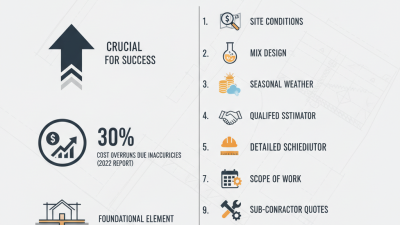
To navigate this complexity, it helps to know what to expect. A reliable estimate requires clear communication and thorough preparation. Factors like project size, concrete type, and site conditions affect the final number.

Understanding these elements can lead to more accurate outcomes. Additionally, being aware of common pitfalls can help avoid surprises. Getting the right concrete estimate is not just about the numbers. It reflects careful planning and expertise, ensuring successful project execution.

Top 10 Tips for Getting an Accurate Concrete Estimate

Understanding the Basics of Concrete Estimation

Concrete estimation is a crucial step in any construction project. It involves calculating the amount of concrete needed for different applications. Accurate estimation can prevent overages or shortages. Understanding the factors that influence these calculations is essential.

Start by assessing the project site. Measure the area that requires concrete. Consider the depth and type of installation. These measurements will directly affect your total concrete volume. Using clear, precise numbers is vital. Mistakes can easily lead to waste of both materials and money.

In addition to measurements, consider the local conditions. Weather can greatly impact drying times and overall project success. Adjust your estimates accordingly. It's important to communicate with suppliers and contractors to ensure that everyone is aligned. Miscommunication can lead to errors in delivery and scheduling. Accuracy in estimation requires collaboration and ongoing dialogue.

Top 10 Tips for Getting an Accurate Concrete Estimate

Tip Number Tip Title Description
1 Understand Concrete Types Different concrete types serve different purposes. Knowing which type is needed is essential for an accurate estimate.
2 Calculate Volume Proper volume calculations help determine how much concrete you need, preventing over or under-ordering.
3 Consider Labor Costs Labor can account for a significant portion of the estimate. Include all labor costs in your calculations.
4 Account for Site Preparation Site preparation affects costs. Include expenses for clearing, grading, and excavation.
5 Get Multiple Quotes Comparing estimates from different contractors can help ensure you get a fair price.
6 Inquire About Additives Additives can enhance concrete properties but also increase costs. Understand which are necessary for your project.
7 Factor in Weather Conditions Weather can delay work and affect curing times. Include potential extra costs in your estimate.
8 Specify Thickness and Reinforcement Details on thickness and reinforcement affect material needs and strength, impacting the overall estimate.
9 Budget for Finishing Finishing work can be time-consuming. Ensure it is included in the final estimate.
10 Review and Adjust Regularly Regularly revisiting and adjusting your estimates can help keep your project on budget.

Gathering Accurate Site Measurements and Specifications

Accurate site measurements are crucial for a successful concrete estimate. Start by using reliable tools, like a measuring tape or laser distance measurer. Measure the length and width of the area precisely. It’s easy to make mistakes with assumptions. Small errors can lead to significant discrepancies later. Double-check your numbers against a sketch of the area. This helps visualize the layout and ensures that you captured every angle.

Collecting specifications is equally important. Identify the type of concrete and its thickness needed for your project. Different quantities can affect the total cost. If uncertain, consult with a professional or refer to local building codes. Review past projects for insight into typical specifications. Document everything you gather. This practice not only aids in accuracy but also builds credibility with your estimator. Reflect on the information gathered and adjust if necessary. Keep an open mind; sometimes, details change during the estimating process.

Identifying Quality Materials and Their Impact on Cost

When planning a concrete project, choosing quality materials is crucial. The type of concrete mix can significantly impact the project's overall cost. Higher-grade materials often lead to greater durability but may increase initial expenses. Understanding the relationship between material quality and price helps in making informed decisions.

Consider evaluating the mix design. A well-balanced mix with appropriate additives can enhance performance. This, however, might come at an extra cost. Taking this route could provide long-term benefits like reduced maintenance or longer-lasting structures. Paying attention to the details of material selection might seem tedious, but it plays a vital role in the overall quality and expense.

Establish a clear communication line with your contractor. They should understand your quality expectations and budget constraints. Discussing specific material choices early can help avoid misunderstandings later. Remember to request samples when possible. Visual and tactile assessments can lead to better decisions. A transparent dialogue fosters a collaborative effort in sourcing materials, ensuring both quality and affordability are achieved.

Top 10 Tips for Getting an Accurate Concrete Estimate

This chart represents the estimated cost impact of various factors when getting a concrete estimate. Quality materials have the highest influence on cost, followed by labor and transportation costs. Understanding these factors can help in obtaining a more accurate estimate.

Calculating Labor Needs for Concrete Projects

Calculating labor needs for concrete projects requires careful consideration of several factors. One major aspect is the size of the area being worked on. Larger projects often demand more workers, but this doesn't always mean increased efficiency. Overcrowding can lead to delays and miscommunication among the crew. Evaluating the specific tasks each worker will perform is essential in achieving a balanced workforce.

Experience plays a crucial role in determining labor needs. Skilled workers can move quickly and make fewer mistakes, reducing overall labor hours. On the other hand, inexperienced team members may require more supervision and time. It's important to assess the team’s skill set and allocate tasks accordingly. Sometimes, it's a tough call when balancing experience with project deadlines.

Another point to consider is the job's timeline. Tight deadlines may necessitate hiring additional labor, but this can strain your budget. Conversely, taking too long to complete a project can lead to client dissatisfaction. Constantly reevaluating your labor needs throughout the project can help mitigate risks. Engaging with your team for feedback could unveil hidden inefficiencies or areas for improvement.

Seeking Multiple Quotes and Comparing Estimates

When seeking a concrete estimate, comparing multiple quotes is crucial. Research from the National Ready Mixed Concrete Association shows that nearly 80% of homeowners choose to get multiple estimates. This practice not only provides a clearer picture of costs but also highlights the range of services offered. An estimate might vary significantly based on the contractor's expertise and overhead costs. For example, one contractor may quote $4 per square foot, while another might quote $6. Understanding these differences can help you make an informed decision.
While it can be tempting to choose the lowest price, it is essential to evaluate the details. A report by the American Society of Concrete Contractors indicates that the lowest bid often lacks some necessary elements, like quality materials or labor experience. Take time to review what each estimate includes. You might find that a slightly higher bid covers better warranties or more thorough project management. This nuanced understanding not only reveals potential hidden costs but also ensures the durability and quality of your concrete work. Trust in the data, but your own judgment remains vital.