Choosing a reliable concrete mesh manufacturer requires more than comparing prices or browsing polished product pages. Mesh affects crack control, load distribution, installation speed, and the long-term behavior of slabs, walls, roads, and precast components. A weak specification can create serious problems later.
This guide examines ten leading concrete mesh manufacturers worldwide through practical criteria. These include steel quality, weld consistency, dimensional accuracy, coating options, production capacity, certification, and delivery reliability. We also consider whether manufacturers provide useful technical support, such as bar schedules, cutting services, mill certificates, and application guidance. In real projects, small details matter. A mesh sheet that arrives bent may slow installation. Uneven welding can complicate overlapping. Poor packaging may expose galvanized surfaces to damage before use.
The selected companies represent different strengths, markets, and manufacturing approaches. Some focus on welded wire reinforcement. Others specialize in galvanized, stainless steel, or engineered reinforcement systems. Their suitability depends on project design, regional standards, budget, and site conditions. There is no universal winner. A supplier successful on a highway project may not suit a residential foundation.
This ranking is based on available industry information, manufacturing evidence, customer-facing capabilities, and professional judgment. However, public data is not always complete or equally current. That limitation deserves attention. Buyers should verify certifications, test reports, tolerances, and shipment terms directly with each manufacturer. Concrete mesh is only effective when its specification, installation, and surrounding concrete work are properly controlled.
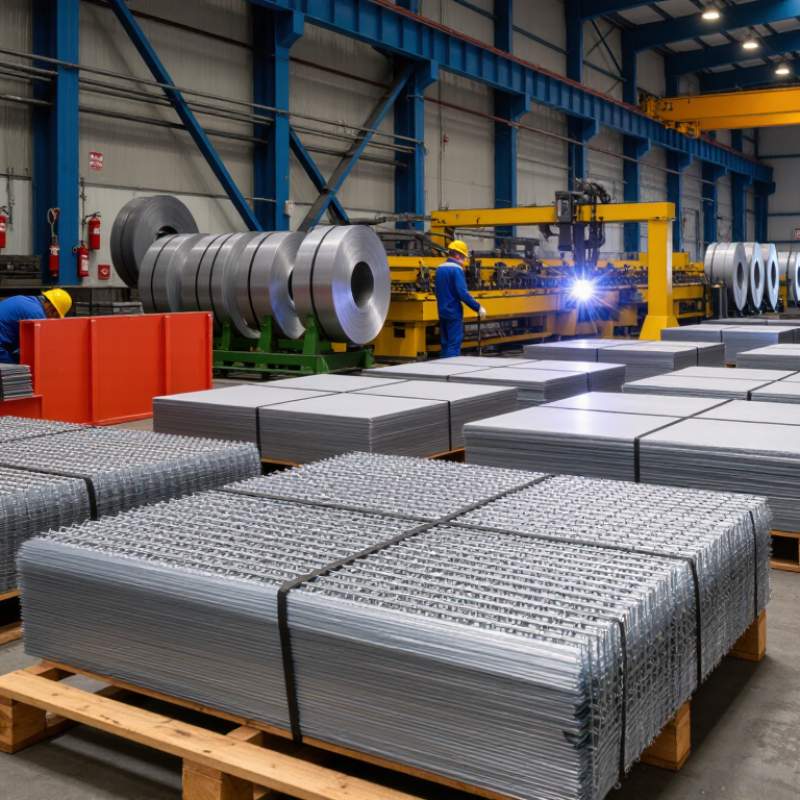
What Is Concrete Mesh and Why Is It Important?
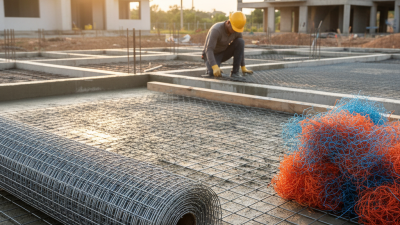
Concrete mesh is a prefabricated grid of steel wires or bars, usually welded at regular intersections. It sits inside concrete slabs, walls, pavements, and precast elements. Its main role is controlling shrinkage cracks and distributing tensile stress. It does not make weak concrete strong by itself. That distinction matters.
The Global Status Report for Buildings and Construction 2023 stated that buildings consumed 34% of global final energy in 2022. The sector also produced 37% of energy and process-related carbon emissions. Longer-lasting concrete components can reduce repeated repairs, material use, and construction disruption. Mesh supports this goal by keeping cracks narrower and limiting localized movement. However, poor placement can cancel its value. Mesh lying on the ground is not effective reinforcement.
On active projects, installers often use spacers to maintain the specified concrete cover. They also check lap lengths, wire diameter, panel alignment, and corrosion protection. These details are easy to overlook. The World Steel Association reported approximately 1.88 billion tonnes of crude steel production in 2023, showing the scale of the material industry behind reinforcement products. For manufacturers, compliance with standards such as ASTM A1064/A1064M, accurate mill certificates, welding consistency, and batch traceability deserve close attention. I would not choose a supplier from price alone. A cheaper panel may create cutting waste, delivery delays, or uncertain performance. Even experienced teams sometimes specify mesh without reviewing actual crack-control requirements.
Concrete mesh is a prefabricated reinforcement grid made from steel wires or bars welded at regular intervals. It helps distribute tensile forces, control shrinkage cracking, and improve the structural performance of concrete slabs, walls, pavements, and precast elements.
Chart basis: The estimates assume a two-way square mesh with 200 mm spacing, a steel density of 7,850 kg/m³, and equal wire diameter in both directions. Actual mesh mass varies according to wire diameter, spacing, manufacturing tolerances, and the applicable design standard.
Choosing among the 10 best concrete mesh manufacturers worldwide requires more than comparing prices. Start with manufacturing experience, product consistency, and technical documentation. Reliable producers should provide steel grades, wire diameters, mesh spacing, weld strength, and coating details. These records make specifications easier to verify.
Ask for independent test reports and traceable batch numbers. A serious manufacturer can explain how raw materials are inspected and how welded joints are tested. Check whether products meet relevant construction standards in your project’s location. Certifications matter, but their scope should match the actual mesh supplied. A certificate alone is not enough.
Request samples before placing a large order. Measure the wire with calipers and inspect welds for uneven spacing, weak joints, or excessive rust. Packaging should protect the mesh from moisture during transport. Delivery history also deserves attention, especially for large projects with fixed installation schedules. I have seen attractive quotations hide unclear tolerances and replacement terms. That mistake can become expensive on site. A polished website is not proof.
Evaluate technical support, communication speed, and willingness to answer difficult questions. Manufacturers with experienced engineers can recommend mesh dimensions based on load requirements, slab thickness, and installation conditions. However, their advice should support, not replace, the project engineer’s design. Review customer references carefully, and compare similar applications rather than general praise. The best choice is usually the supplier with clear evidence, repeatable quality, and honest limits.
The top 10 concrete mesh manufacturers should be judged by product quality and market reach, not factory size alone. This review considers weld consistency, wire diameter tolerance, coating stability, certification, and delivery capacity. These details matter on a real site, where uneven intersections can disturb concrete cover and create weak points.
World Steel Association data recorded about 1.88 billion tonnes of crude steel production in 2023. Construction remains one of the largest steel-consuming sectors, representing roughly half of global demand. That scale explains the importance of dependable mesh suppliers. Strong manufacturers typically provide traceable heat numbers, mill certificates, automated welding records, and testing against standards such as ASTM A1064 or EN 10080. Small details matter.
Reach also separates the leading ten from regional producers. According to the International Trade Centre, steel products move through highly active global trade routes, but shipping costs and local standards can quickly change supplier rankings. A practical evaluation should examine export coverage, warehouse locations, cutting services, and technical support. A manufacturer may offer excellent mesh yet struggle with remote delivery. That weakness is easy to overlook. No ranking is perfect, because public data rarely shows rejected batches, delayed shipments, or site-level complaints. Independent audits and recent customer evidence should therefore influence the final order.
Concrete mesh manufacturers are evolving beyond standard welded wire panels. Their key products now include high-tensile reinforcement mesh, galvanized sheets, stainless-steel mesh, and prefabricated cages. Automated resistance welding improves spacing accuracy and production speed. Digital cutting systems also reduce waste on complex construction projects.
The World Steel Association reported about 1.89 billion tonnes of crude steel production in 2023. Construction remains one of steel’s largest end-use sectors. Industry reports from MarketsandMarkets project steady growth in the global steel rebar market through 2029, supported by transport infrastructure, industrial flooring, precast components, and urban housing. Leading manufacturers increasingly serve regional markets with localized mesh sizes and certified mechanical performance. However, quality claims can vary. Independent testing still matters.
Tips: Check tensile strength, wire diameter, panel flatness, weld integrity, and corrosion protection. Confirm compliance with ASTM A1064, BS 4483, or relevant regional standards. Ask for batch traceability and mill certificates. Recycled steel content can support sustainability goals, but it should not replace performance verification. This is where many purchasing teams become too optimistic. Price alone rarely reflects lifecycle value.
| Manufacturer Profile | Primary Operating Region | Key Concrete Mesh Products | Core Manufacturing Technologies | Typical Applications | Main Market Coverage | Common Technical Standards and Compliance Areas |
|---|---|---|---|---|---|---|
| Profile 01 | Western Europe |
|
|
|
Building construction, infrastructure, precast concrete, civil engineering, and public works. | European reinforcing-steel requirements, ISO 9001 quality systems, material traceability, and project-specific structural specifications. |
| Profile 02 | North America |
|
|
|
Commercial construction, transportation infrastructure, industrial facilities, residential foundations, and precast production. | ASTM and ACI-based project specifications, welding-quality controls, yield-strength verification, and heat or lot traceability. |
| Profile 03 | East Asia |
|
|
|
Domestic infrastructure, export construction markets, precast concrete, ports, railways, and urban development. | National reinforcing-steel standards, ISO 9001 systems, tensile and bend testing, weld-shear testing, and batch certification. |
| Profile 04 | Northern Europe |
|
|
|
Green building, infrastructure renewal, renewable energy, modular construction, and public-sector projects. | European structural standards, environmental product documentation, responsible-sourcing requirements, ISO 14001, and ISO 9001. |
| Profile 05 | Central and Eastern Europe |
|
|
|
Regional building materials distribution, residential construction, infrastructure, agriculture, and precast concrete. | EN-based reinforcement requirements, factory production control, tensile testing, dimensional tolerances, and product conformity documentation. |
| Profile 06 | Middle East |
|
|
|
Gulf construction, industrial plants, energy infrastructure, water projects, ports, and large commercial developments. | ASTM, BS, and EN project requirements; galvanizing specifications; weld-quality inspection; and third-party material certification. |
| Profile 07 | South Asia |
|
|
|
Fast-growing urban construction, infrastructure programs, precast manufacturing, agriculture, and export markets. | National standards for reinforcing steel, ISO 9001 quality management, chemical analysis, tensile testing, bend testing, and weld inspection. |
| Profile 08 | Southeast Asia |
|
|
|
Residential development, industrial construction, export manufacturing, ports, logistics centers, and infrastructure. | ASTM, BS, and local construction standards; coating-thickness checks; tensile testing; weld integrity; and traceable batch records. |
| Profile 09 | Latin America |
|
|
|
Urban construction, mining, agriculture, transportation infrastructure, precast concrete, and regional distribution. | Local reinforcing-steel standards, ASTM or ISO-based testing where specified, weld-shear verification, and project inspection records. |
| Profile 10 | Oceania and Asia-Pacific |
|
|
|
Residential construction, mining, civil engineering, transport infrastructure, water projects, and coastal development. | AS/NZS reinforcement requirements, ISO 9001 quality systems, mill certificates, tensile and bend testing, and fabrication tolerances. |
A global ranking can attract attention, but project fit matters more. The right manufacturer should understand your concrete design, loading conditions, climate, and delivery schedule. Ask for technical data before discussing price. Check wire diameter, spacing tolerance, weld strength, panel dimensions, and coating performance. These details affect placement, cracking control, and long-term durability.
Ask for recent test reports from independent laboratories. Review mill certificates, quality-control records, and traceability procedures. A reliable manufacturer can identify the steel batch, production date, and inspection results. Confirm compliance with the standards required in your project location. Do not assume one certificate covers every product. It may not.
Request samples when practical. Measure the mesh, inspect welds, and compare it with the approved drawings. Visit the factory or arrange a live production audit if the order is large. Production capacity matters, but communication matters too. Can the supplier explain delays clearly? Can it manage design changes without losing records? These answers reveal operational maturity.
I have seen projects choose the lowest quotation and later pay for rework, late shipments, or inconsistent dimensions. That mistake is easy to repeat. Ask for references from similar construction projects, not just a polished brochure. Evaluate packaging, corrosion protection, loading methods, and replacement procedures. A strong manufacturer may not be the cheapest option, but it should offer evidence, consistency, and accountable support.
Get a personalized quote tailored to your project needs. Request a quote today and let us help you build with passion.
Looking for a concrete contractor you can trust? Fill out the form below to get our recommendations sent to your inbox.