Why Choose Commercial Artificial Grass for Your Business?

Commercial Artificial Grass is increasingly considered for business landscapes where appearance, foot traffic, and maintenance costs all matter. A neat green entrance can strengthen a first impression. A durable surface can also reduce routine mowing and irrigation. Still, synthetic turf is not a universal fix; drainage, heat, and expected use deserve careful review.

The U.S. Environmental Protection Agency’s WaterSense program reports that outdoor water use accounts for more than 30% of average household water use, with higher shares in dry regions. This is household data, not a commercial-landscape estimate, but it shows why water demand matters when planning grounds. The Synthetic Turf Council’s buyer guidance also stresses evaluating product quality, installation, drainage, and maintenance—not appearance alone. Turfgrass scientist Dr. James B. Beard’s research offers a related principle: select turf according to its intended function and site conditions. In practical terms, that means checking pile height, backing, infill, and how rainwater leaves the surface. One detail matters.

For a hotel courtyard, retail frontage, or office terrace, the right specification depends on daily foot traffic and the look the business needs to maintain. Artificial grass may simplify upkeep, but it still needs brushing, debris removal, and periodic inspection. It can also feel hot under direct sun. There is no perfect surface. A careful comparison of installation cost, expected lifespan, water needs, and maintenance gives owners a more credible basis for deciding whether Commercial Artificial Grass fits their property.
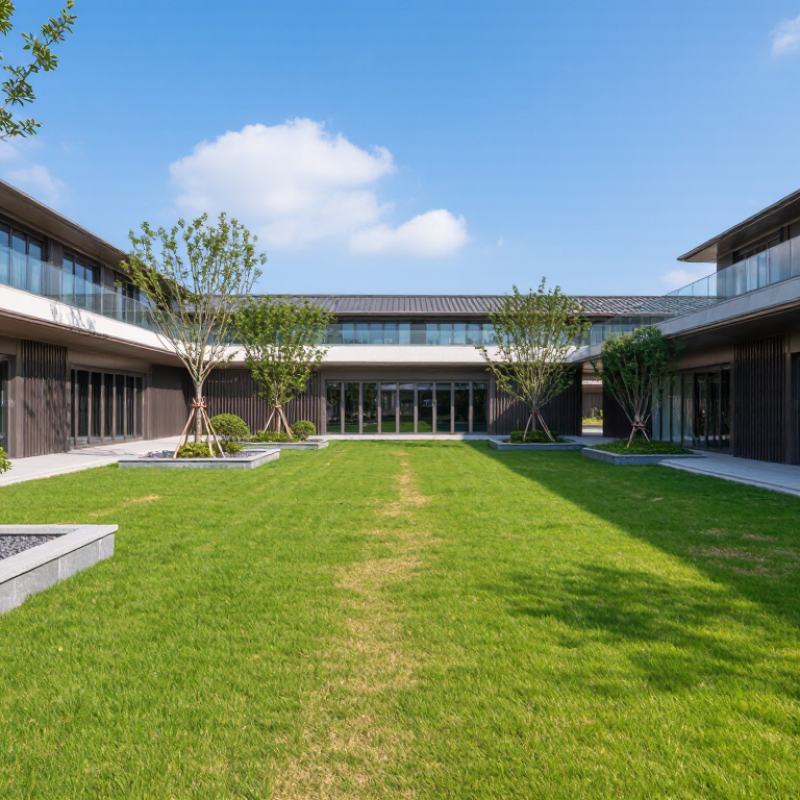
Why Choose Commercial Artificial Grass for Your Business?

What Commercial Artificial Grass Is and How It Works

Commercial artificial grass is a layered surface, not simply green fibers fixed to concrete. The yarn is tufted through a backing, then secured with coatings and installed over a prepared base. Depending on the site, the system may include sand or other infill to support the blades and add stability. Perforations in the backing let water pass into the drainage layer below. The base matters. Poor grading can leave puddles near doorways, even when the turf itself drains well.

For a business, this structure can reduce routine watering. The U.S. Environmental Protection Agency’s WaterSense guidance says outdoor use can account for more than 30% of household water use in some areas; that figure is not a commercial-site guarantee, but it shows why landscape water deserves attention. Artificial turf does not eliminate upkeep. Staff still need to remove leaves, rinse spills, brush flattened fibers, and check seams and edges. Small details count. A chair dragged across a poorly secured edge may lift it over time. Heat is another consideration: synthetic fibers can feel warmer than living grass in direct sun, so shaded seating and surface testing are sensible before installation. The system works best when its backing, infill, drainage, and base are selected for the actual foot traffic—not just the appearance in a sample.

Key Benefits for Business Properties

Commercial artificial grass can give a business property a tidy, consistent appearance without regular mowing. It suits hotel courtyards, office entrances, and small outdoor seating areas where natural grass struggles with frequent foot traffic. The surface stays green through dry spells, and staff spend less time trimming edges or clearing clippings. That can make routine upkeep easier to schedule.

The benefits depend on good planning. A properly prepared base and suitable drainage help prevent puddles and uneven spots, but installation quality matters. Artificial turf can also become hot in direct sun, so shaded seating or a cooler surface choice may be important. It is not maintenance-free: leaves, dust, and occasional spills still need attention. And some sites may look more natural with real planting mixed in. That trade-off is worth considering.

Tips: Check foot traffic, sun exposure, drainage, and cleaning needs before choosing a surface. Ask for a sample and inspect it outdoors. A small test area can reveal issues that photos miss.

Why Choose Commercial Artificial Grass for Your Business? - Key Benefits for Business Properties

Business consideration Potential benefit Practical details Planning note
Water use No routine irrigation is needed to keep the surface green. Occasional rinsing may still be useful for dust, spills, or pet waste. Actual water savings depend on the size of the area and the local watering needs of the natural landscape it replaces.
Routine maintenance Reduces tasks such as mowing, edging, and applying lawn fertilizer. Typical upkeep can include removing debris, brushing flattened fibers, and checking seams and edges. Maintenance needs vary with foot traffic, nearby trees, weather, and the type of use.
Appearance Provides a consistent green surface throughout the year. Modern products are available in different pile heights, colors, and fiber textures. Samples viewed in the property’s lighting can help assess color and texture before selection.
Foot traffic Can provide a defined landscape surface for entrances, courtyards, and other frequently used areas. Product construction, backing, infill, and sub-base all affect performance. Choose a product suited to expected traffic; heavy-use locations may require more frequent brushing and inspection.
Drainage A properly designed installation can allow water to drain through the surface. Drainage depends on the turf backing, prepared sub-base, site grading, and local soil conditions. Confirm drainage design with the installer, especially on sites with heavy rainfall or existing runoff issues.
Service life Can serve as a long-term landscape surface when correctly selected and maintained. Service life varies by product quality, installation, exposure, and intensity of use; some installations are used for roughly 8–15 years. This is a general range, not a guarantee. Review product specifications and warranty terms for the intended application.
Seasonal conditions Does not become muddy in the same way as natural soil-based turf. Surface temperature can rise in direct sun and may be higher than natural grass on hot days. For customer or staff areas, consider shade, light-colored materials, and a plan for hot-weather use.
Business presentation Creates a tidy, defined landscape area that can complement outdoor customer spaces. Suitable applications may include courtyards, terraces, office grounds, and display areas. Check local requirements, accessibility needs, fire considerations, and any restrictions before installation.
Benefits and performance depend on product choice, installation quality, site conditions, and maintenance. Figures are general guidance rather than product-specific guarantees.

Common Commercial Uses Across Industries

Commercial artificial grass is used in hotel courtyards, restaurant patios, retail entrances, office campuses, and childcare play areas. A narrow green strip beside a storefront can soften concrete; a rooftop lounge can offer a tidy surface where natural grass struggles. Sports and recreation facilities also use synthetic turf for practice zones and multi-use fields. Each setting has different needs. A play area calls for suitable impact protection, while a restaurant patio needs stable furniture placement and easy cleanup.

Water demand can shape these choices. The U.S. EPA WaterSense program estimates that outdoor use accounts for about 30 percent of average household water use, reaching up to 60 percent in dry regions. This is residential data, not a commercial-site forecast, but it highlights the value of considering irrigation in landscape planning. Artificial grass can reduce routine watering, yet it still needs debris removal, occasional washing, and properly designed drainage. Looks polished. Needs upkeep. Surface heat also matters: shaded seating and suitable materials may improve comfort, but they do not make every sunny site comfortable. A site assessment should consider foot traffic, drainage, local climate, and how the space will actually be used. A small test area can reveal issues that product samples cannot.

How to Choose the Right Turf for Your Business

Choosing commercial artificial grass starts with how your site is used, not how lush a sample looks. Map the busiest routes: a café entrance, a daycare play area, or a narrow path beside shop windows. Foot traffic wears fibers differently. For queues and outdoor seating, compare denser, shorter piles that recover well under chairs and regular walking. A tall, soft pile may look inviting, but it can flatten sooner in a busy corridor.

Ask for specifications on face weight, yarn shape, UV resistance, and drainage, then match them to local weather and cleaning needs. Check the backing and drainage rate, especially where rain collects near doors or paved edges. Request a sample and press it under a chair leg for a few days. Small test. It will not predict every season, but it can reveal slow recovery or visible color changes. Consider whether loose infill suits your site; it may need frequent top-ups around entrances.

Installation matters as much as the turf itself. A stable, well-drained base helps prevent dips that trap water and create uneven walking surfaces. Ask how seams, edges, and transitions will be secured, and what brushing is recommended. Be candid about trade-offs: turf can reduce mowing, yet it still needs debris removal and periodic inspection. A common mistake is treating “low maintenance” as “no maintenance.”

Why Choose Commercial Artificial Grass for Your Business?

How to Choose the Right Turf: Typical Pile-Height Ranges

How to read this chart: The bars show example product-specification ranges, not universal standards. Shorter pile heights can suit putting surfaces and busy walkways; longer options may be considered for landscaping, pet areas, and recreation. Compare the actual product specifications, traffic level, drainage, infill, and maintenance requirements before choosing.

Pile-height ranges are approximate examples; specifications vary by product and supplier. Confirm requirements for your site and intended use.

Installation, Maintenance, and Long-Term Costs

Installation affects both appearance and long-term cost. A site assessment should check drainage, ground firmness, intended use, and daily foot traffic. For example, a narrow entry path may need a firmer base than a lightly used courtyard. The installer typically removes loose soil, compacts a suitable base, and secures seams and edges. Poor drainage can leave puddles; uneven groundwork may show through the surface. These details are easy to underestimate.

Maintenance is manageable, but not zero. Leaves and litter can be removed with a blower or stiff broom, while dusty areas may need occasional rinsing. Brushing high-traffic sections helps lift flattened fibers. Spills should be cleaned promptly, using methods suitable for the turf and infill. Check seams and perimeter edges during routine inspections. Small repairs are usually simpler than allowing damage to spread. It is not maintenance-free.

Long-term costs depend on product quality, installation, climate, and usage. A busy café patio or workplace entrance may wear faster than a quiet display area. Compare the initial quote with expected cleaning, repair, and eventual replacement costs over several years. Ask what the quote includes, such as ground preparation, waste removal, and drainage work. One caution: projected savings can look neat on paper, while local conditions are less predictable. A shaded, damp corner may need more attention than expected.