How to Choose the Right Concrete Mesh for Your Project?

Choosing the right concrete mesh begins with the structure, not the product label. A driveway, warehouse slab, retaining wall, and precast panel face different loads, crack risks, and exposure conditions. The mesh must match these demands through wire diameter, spacing, sheet size, strength, and corrosion resistance.

Industry guidance supports a careful approach. ACI 318 provides structural requirements for reinforced concrete, while ASTM A1064 covers carbon-steel wire and welded wire reinforcement. The Concrete Reinforcing Steel Institute also stresses correct detailing, support, laps, and concrete cover. These small details affect performance. A strong mesh can still fail to control cracking if workers place it on the ground instead of supporting it at the designed elevation.

Peter C. Taylor, a recognized concrete materials specialist, has emphasized that “concrete is a highly variable material.” That point deserves attention. Mix proportions, curing, temperature, restraint, and site workmanship can change results. Reports from the Global Cement and Concrete Association and the International Energy Agency also underline concrete’s enormous global use and its continuing performance challenges. Yet broad market growth does not make every mesh suitable.

The practical choice starts with drawings, load calculations, exposure conditions, and local code requirements. Galvanized or stainless options may suit wet or aggressive environments, though cost and compatibility require review. A tidy grid is not automatically the correct grid. The best selection balances engineering evidence, installation reality, and long-term risk. Some project decisions remain uncertain; documenting those assumptions is better than hiding them.
How to Choose the Right Concrete Mesh for Your Project?

Understanding Concrete Mesh and Its Role in Construction

Concrete mesh is more than a grid placed inside fresh concrete. It helps distribute tensile stresses, limit shrinkage cracks, and maintain slab performance under repeated loads. Welded wire mesh usually contains longitudinal and transverse wires, identified by wire diameter and spacing. Those details matter.

The right mesh depends on slab thickness, load, joint layout, soil support, exposure, and required crack control. A warehouse floor may need heavier reinforcement than a residential path. ACI 318-19 emphasizes proper reinforcement placement, concrete cover, and development length. These requirements protect steel from corrosion and help transfer forces through the slab. The 2023 Global Status Report for Buildings and Construction links the sector to 37% of global energy-related emissions, so efficient material use deserves attention. More steel is not automatically better.

The World Steel Association reported approximately 1.89 billion tonnes of crude steel production in 2023. Availability is broad, but quality and traceability still vary by project region. Check the mesh’s yield strength, weld quality, corrosion condition, and compliance documents. On site, support chairs should keep the mesh near its designed position. Walking directly on unsupported mesh can push it onto the ground. That mistake is surprisingly common.

Tips: Compare the design drawing with actual site conditions before ordering. Confirm sheet dimensions, lap lengths, bar spacing, and concrete cover. For outdoor slabs, review drainage and exposure risks. A slightly cheaper mesh can become expensive if poor placement causes cracking. Engineers should verify the final selection, because practical assumptions sometimes fail.

Identifying Your Project’s Structural and Environmental Requirements

Choosing concrete mesh starts with the structure, not the product label. Review the engineer’s drawings, slab thickness, span, joint layout, and expected loads. A warehouse floor carrying forklifts needs different reinforcement from a garden path or residential driveway. Mesh spacing and wire diameter affect crack control, load distribution, and handling during placement. A simple rule can mislead.

Environmental conditions matter just as much. Check whether the concrete will face coastal salt, deicing chemicals, constant moisture, freeze-thaw cycles, or high temperatures. Corrosive exposure may require suitable protective treatment, increased concrete cover, or a different reinforcement specification. Local codes and the project engineer should guide that decision. Do not assume heavier mesh solves every durability problem.

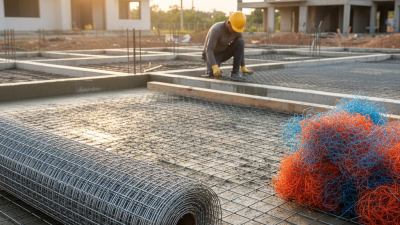
On site, confirm the mesh stays at the designed height using proper supports. Workers should not drag it into position after pouring begins. Check overlaps, clearances, and penetrations around drains or service openings. A small misplaced section can weaken crack control near a high-stress area. Keep records of delivery certificates, sizes, coatings, and inspection results. These details support reliable quality checks later.

Real projects rarely match the first estimate perfectly. Soil movement, wet weather, and revised equipment loads can change the reinforcement requirement. Recheck the design when conditions change. That extra review may feel inconvenient, but it is cheaper than repairing preventable cracking.

Comparing Concrete Mesh Types, Materials, and Reinforcement Patterns

Choosing concrete mesh starts with load, exposure, and crack-control goals.

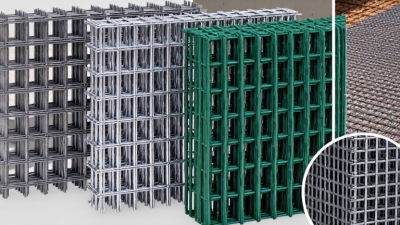
Welded wire reinforcement uses regular square or rectangular patterns. It suits slabs, walls, and precast panels when placement remains accurate. Deformed steel bars provide stronger anchorage for heavily loaded members. Fiber reinforcement spreads through the mix, reducing plastic-shrinkage cracks. It does not automatically replace structural reinforcement.

ACI 318 requires engineers to verify strength, spacing, cover, and development length. Mesh selection should follow that design, not a stock sheet.

On site, a neat grid can still fail when chairs sink into wet concrete.

Material changes durability.

Plain carbon steel is economical, but moisture and chlorides can accelerate corrosion. Galvanized or stainless wire adds protection in parking decks, coastal slabs, and water-treatment areas. Synthetic fibers resist corrosion, though dosage and mixing quality matter.

The Global Cement and Concrete Association reports that concrete contributes about 7% of global carbon dioxide emissions. The World Steel Association recorded roughly 1.9 billion tonnes of crude steel production in 2023.

Lighter reinforcement may reduce material use, but thinner is not automatically greener. Pattern matters too. Smaller openings distribute cracks more evenly, while larger openings may suit simpler slabs.

I would question any design based only on mesh weight.

Tips:

  • Confirm wire diameter and spacing from structural drawings.
  • Check ASTM A1064/A1064M compliance for welded wire reinforcement.
  • Keep mesh at the specified elevation with durable supports.
  • Overlap sheets consistently, and photograph placement before pouring.
  • Do not drag mesh upward during placement.
  • That shortcut changes cover and bond.

Selecting the Appropriate Mesh Size, Strength, and Coverage

How to Choose the Right Concrete Mesh for Your Project?

Choosing concrete mesh starts with the slab’s purpose, not the cheapest roll. A patio carrying garden furniture needs different reinforcement from a driveway serving a loaded van. Measure the span, slab thickness, soil condition, and expected loads before selecting mesh. A common mistake is choosing large openings because they are easier to handle. They may leave weak zones near edges and joints. Small details matter.

Mesh size controls spacing and crack distribution. Tighter spacing can suit thin slabs or areas with temperature movement. Heavier wire improves tensile support where loads repeat, but it cannot replace proper subgrade preparation. Check the wire diameter, yield strength, and sheet dimensions. Do not rely on labels alone. Request test certificates when the project carries serious structural responsibility. Local engineering requirements may also affect the selection.

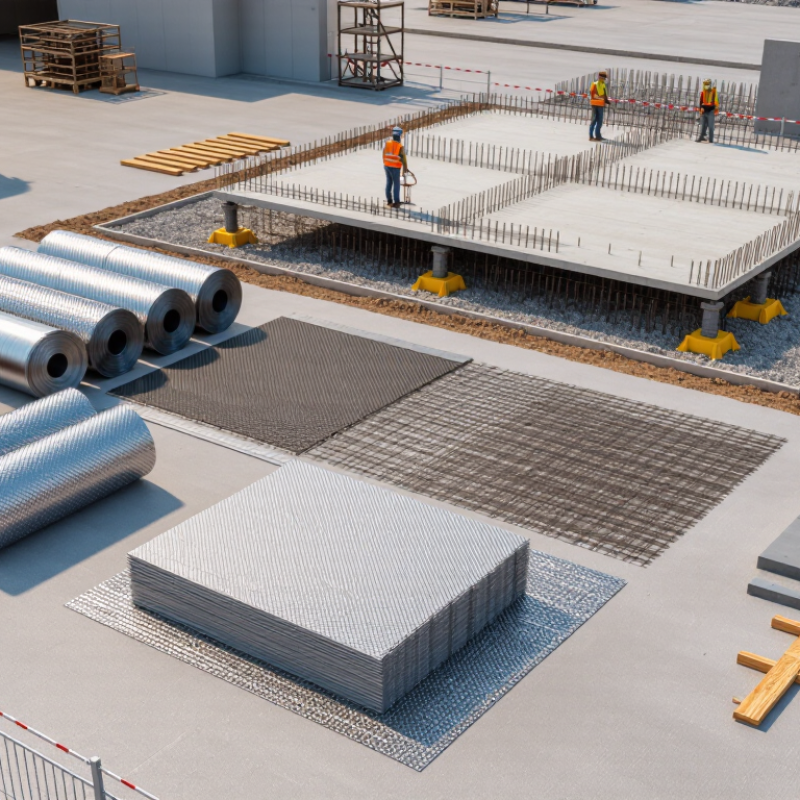
Coverage needs careful planning. Sheets should overlap according to the engineer’s specification, with enough support to keep them correctly positioned during pouring. Plastic chairs or concrete spacers work better than stones or loose debris. Keep laps away from major cracks and openings when possible. I have seen mesh sink into wet concrete and become nearly decorative. That error is easy to make, and harder to repair. Recheck quantities for cuts, overlaps, and waste before delivery.

Checking Standards, Installation Needs, and Material Quality

Choosing concrete mesh starts with standards, not price. ASTM A1064/A1064M covers welded wire reinforcement, including wire properties, dimensions, and weld performance. Check the specified wire diameter, spacing, and sheet or roll format against the structural drawings. ACI 318-19 also requires reinforcement to meet design, durability, and placement conditions. These details matter when slabs face forklifts, thermal movement, or repeated loading.

Installation needs can change the correct mesh. ACI 360R-10 discusses reinforcement placement for slabs on ground, including support, spacing, and position within the concrete section. Mesh should remain at the designed elevation, not lie on the soil. In practice, workers sometimes lift mesh during pouring. That shortcut can reduce cover and create uneven crack control.

It happens. Use chairs, supports, and enough overlaps for stable placement. Check access, cutting points, joints, and openings before delivery.

Tips: Request mill certificates and welding test records. Confirm compliance with ASTM A1064/A1064M. Inspect for heavy rust, bent wires, damaged welds, and inconsistent spacing. The World Steel Association reported 1,892.2 million tonnes of crude steel production in 2023, but volume does not prove reinforcement quality. Traceability still matters. I would also measure several panels on arrival, because relying only on labels is an easy mistake. A small site check can prevent expensive repairs later.