Top 10 Insulated Concrete Forms Manufacturers Worldwide?

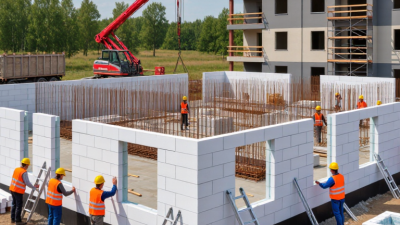
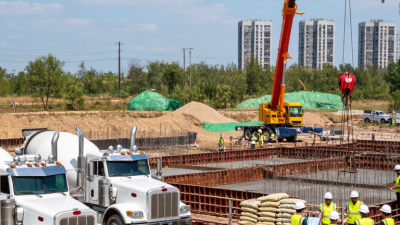
Insulated concrete forms are moving from a specialist building method into mainstream low-rise construction. They combine stay-in-place foam forms, reinforced concrete, and continuous insulation. The result is a solid wall with fewer thermal breaks. On a busy site, that difference is visible: workers stack lightweight forms, place steel, and pour concrete into one continuous assembly.

Market data supports this growing interest, although the numbers are not perfectly aligned. Grand View Research estimates that the global insulated concrete forms market was worth about USD 1.1 billion in 2023. It also projects steady growth through 2030. Research and Markets reports a similar expansion pattern, driven by energy codes, resilient construction, and demand for efficient housing. These reports use different definitions and regional assumptions. That matters when comparing manufacturers.

Pieter VanderWerf, an ICF construction author and industry educator, describes the method clearly: “ICFs combine the strength of reinforced concrete with the energy performance of continuous insulation.” His point remains practical. Product quality alone does not guarantee performance. Design detailing, reinforcement placement, concrete consolidation, and trained installation crews all influence the finished wall.

This ranking examines the top 10 insulated concrete forms manufacturers worldwide. It considers product range, technical support, certifications, geographic reach, and documented project experience. It also recognizes an uncomfortable limitation. Public company data varies widely. Some manufacturers disclose factory capacity, while others emphasize dealer networks. Buyers should verify current specifications, local approvals, and installer capability before making a decision. Global visibility is useful. It is not proof of local suitability.
Top 10 Insulated Concrete Forms Manufacturers Worldwide?

What Are Insulated Concrete Forms and How Do They Work?

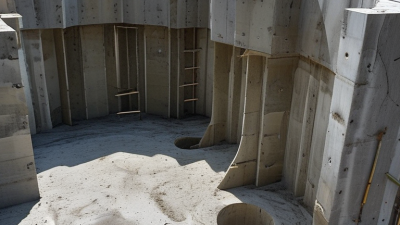
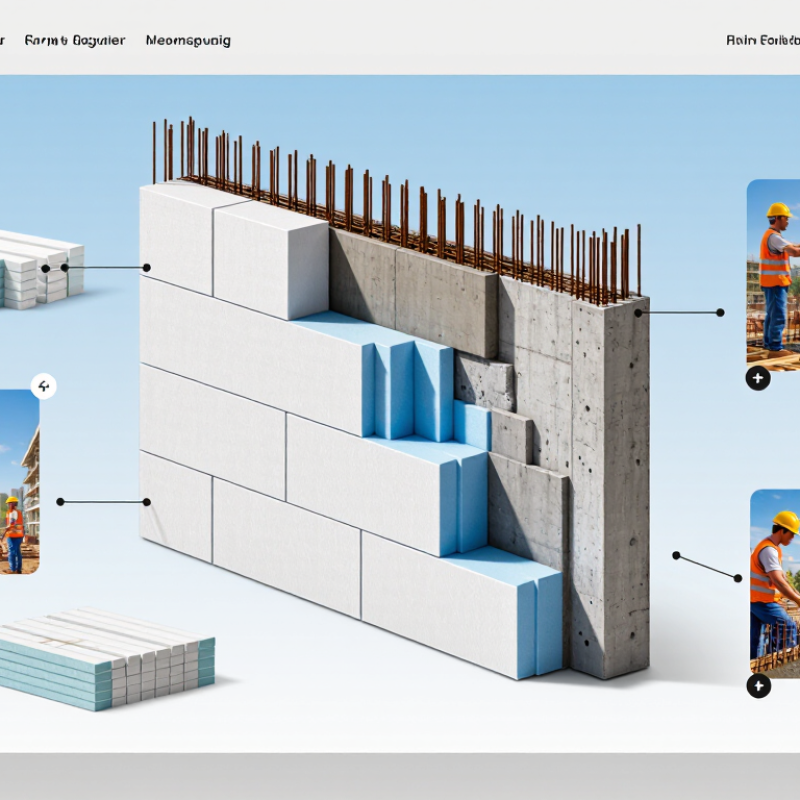
Insulated concrete forms, or ICFs, are hollow foam panels used as permanent wall forms. Workers connect the panels, place steel reinforcement, and pump concrete into the cavity. The foam remains after curing. It creates continuous insulation on both sides of the concrete wall.

The concrete core provides strength, mass, and resistance to wind and impact. The foam limits heat transfer through the wall surface. This can reduce indoor temperature swings and improve comfort near exterior walls.

During installation, crews must align the forms carefully and brace them before pouring. A small gap can widen under concrete pressure. That detail is easy to underestimate.

ICF walls also reduce many thermal bridges found in conventional framing. However, performance depends on window installation, roof connections, drainage, and ventilation. The wall itself cannot correct poor building design.

Moisture management still matters, especially around foundations and openings. Fire protection, reinforcement spacing, concrete placement, and local structural requirements need qualified review. Experienced installers watch the pour height and vibration closely.

Too much pressure may distort the form. Too little consolidation may leave voids inside the core. The method is efficient, but not effortless.

It can also require more planning before construction begins. A practical assessment should consider climate, labor skills, site access, and the building’s complete energy design.

Key Criteria for Evaluating ICF Manufacturers Worldwide

Evaluating the top 10 insulated concrete forms manufacturers worldwide requires more than comparing sales volume.

A credible review should examine manufacturing consistency, thermal performance, engineering support, and regional delivery capacity. MarketsandMarkets estimates that the global ICF market will grow steadily through 2028, driven by energy-efficient construction and stricter building standards. Growth alone, however, does not prove product quality.

Technical evidence matters more. Check independent testing against recognized ASTM and ISO procedures. Review fire-resistance reports, compressive-strength data, dimensional tolerances, and documented R-values. The U.S. Department of Energy reports that properly designed ICF walls can deliver strong insulation performance and reduce air leakage compared with conventional assemblies. Ask whether results come from full wall systems or only foam samples. That difference is easy to miss.

Manufacturer experience also appears in practical details, including corner alignment, bracing guidance, concrete flow recommendations, and training for installers. A polished brochure is not enough.

Tips: Request recent third-party test reports, project references in similar climates, and clear warranty conditions. Compare delivered cost, not factory price. Visit a production facility if possible. Small flaws matter. A ranking can still mislead when regional service, local code approval, and replacement-part access are ignored. I would also test a sample block before approving a large order, because real-site handling often exposes weaknesses that spreadsheets conceal.

Regional Distribution and Market Position of Leading ICF Brands

Top 10 Insulated Concrete Forms Manufacturers Worldwide?

The leading insulated concrete forms manufacturers are not distributed evenly across the world. North America remains the strongest regional base, supported by widespread residential construction and familiar concrete wall practices. Local plants reduce freight costs and shorten delivery times. On a typical site, contractors value consistent block dimensions, clean interlocks, and technical support more than attractive brochures.

Europe shows a different market pattern. Energy efficiency rules and retrofit demand support ICF adoption, especially in colder regions. Manufacturers compete through thermal performance, recycled content, and compliance documentation. However, installation habits vary between countries. A system accepted by one authority may require additional testing elsewhere. That creates friction. It also makes regional certification a major part of market position.

Asia-Pacific is expanding, but distribution is uneven. Large urban projects can support imported systems, while smaller markets often need local production or trained installers. Latin America and the Middle East present similar opportunities, shaped by climate, logistics, and concrete availability. In these regions, leading suppliers usually combine durable formwork with distributor networks and on-site guidance.

Rankings remain imperfect because private sales data is limited, and market strength can change after one new factory opens. A manufacturer may look globally powerful yet remain unknown to contractors outside its home region. Field experience suggests reliability is measured at the wall, not in a ranking table.

Profiles of the Top 10 Insulated Concrete Forms Manufacturers

Profiles of the Top 10 Insulated Concrete Forms Manufacturers

The global insulated concrete forms market is expanding steadily. Grand View Research estimates a 2023 value near USD 1.1 billion, with growth projected through 2030. However, published estimates differ. That uncertainty deserves attention.

The top ten manufacturers should be assessed beyond production volume. Several specialize in expanded polystyrene panels with molded plastic webs. Others focus on commercial blocks, specialty corners, or high-load wall systems. Strong profiles examine panel thickness, tie spacing, concrete placement guidance, and local technical support. On an active site, a clear corner detail can prevent hours of rework. Small details matter.

Thermal performance is another dividing line. ASTM-tested assemblies commonly report effective R-values around R-20 to R-30, depending on thickness, reinforcement, and finish layers. Fire testing, moisture resistance, and independent certification should appear in every manufacturer profile. The International Energy Agency continues to identify buildings as a major source of global energy demand, increasing pressure for efficient envelopes. Yet insulation alone does not guarantee performance. Poor compaction, misplaced reinforcement, or unsealed joints can weaken real results. Rankings can be imperfect. They should reflect tested evidence, installer experience, regional availability, and warranty clarity rather than advertising reach. The best profiles also disclose recycled content, manufacturing locations, and limitations, because transparent weaknesses are more useful than polished claims.

Top 10 Insulated Concrete Forms Manufacturers Worldwide

Non-brand-specific product profile benchmarks commonly found across leading ICF systems

The chart compares typical dimensional ranges used in insulated concrete form systems. Concrete core widths commonly range from 4 to 12 inches, while form heights and lengths vary by product design and construction application. These benchmarks describe the broader ICF market and are not company-specific rankings or sales figures.

Product Features, Certifications, and Application Comparisons

When comparing ten leading insulated concrete form manufacturers worldwide, I examine more than thermal ratings. On active building sites, installers notice block alignment, connector strength, cutting speed, and waste. A reliable form should create a continuous insulation layer with minimal cold bridges. It should also hold wet concrete without bulging. That detail matters.

Product features differ considerably. Some systems use expanded polystyrene panels, while others use molded foam with reinforced webs. Panel thickness affects insulation performance, but thicker is not always better.

Small residential walls may need simple interlocking blocks. High-rise or retaining applications require stronger bracing and engineered reinforcement details. Fire resistance, moisture control, sound reduction, and dimensional stability deserve equal attention. Marketing claims can oversimplify these comparisons.

Certification evidence improves confidence, but documents must match the exact product and market. Look for independent evaluation reports, tested fire classifications, structural data, and quality systems such as ISO 9001. Regional standards, including ASTM, CSA, or EN requirements, may influence approval. Application testing is equally important. In cold climates, high thermal resistance can reduce heating demand. In humid regions, drainage and waterproofing details become more critical. Contractors should also verify local code acceptance before ordering. I have seen promising systems lose time because accessories were unavailable. That weakness is easy to overlook. A careful comparison should include training, delivery reliability, installation manuals, and technical support, not only laboratory numbers.