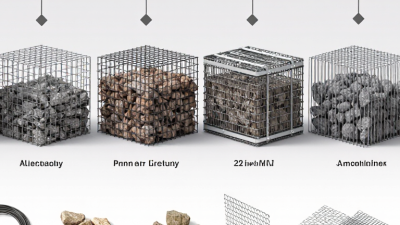
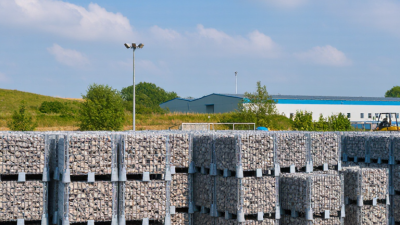
Choosing the best gabion baskets in 2026 takes more than comparing prices or attractive product photos. Buyers need to match the basket’s wire, coating, mesh size, and dimensions to its intended use. A retaining wall beside a wet roadside faces different demands from a garden feature on stable ground. Small details matter. A poorly matched mesh can make filling difficult, while unsuitable wire protection may shorten service life in harsh conditions.
This guide helps global buyers compare practical options, ask suppliers useful questions, and spot details that deserve closer review. It covers common basket styles, materials, coatings, sizing, installation considerations, and sourcing factors. Look for clear product specifications, consistent dimensions, and documented quality checks rather than relying on broad claims alone. Where available, request samples or technical documents before placing a large order. Shipping, packaging, and local project requirements can also change the real value of a product. There is no single best choice for every site. That is worth remembering. Even a well-made basket can perform poorly when the foundation, stone selection, or installation is overlooked. The sections ahead offer a grounded starting point, not a substitute for project-specific engineering advice.
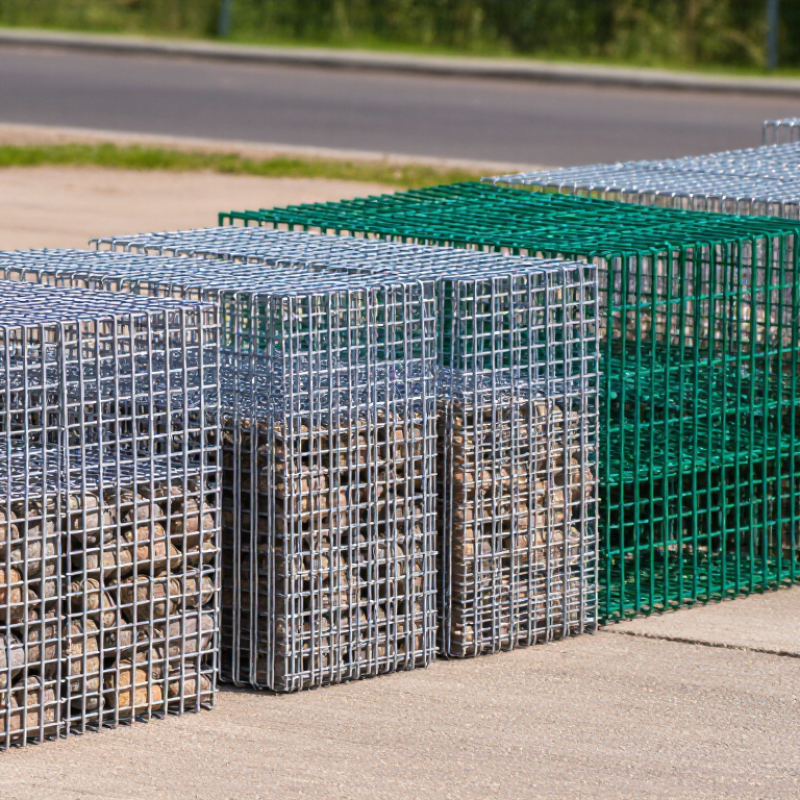
Double-twist mesh is made by weaving paired wires into hexagonal openings. The paired twists help limit unraveling if one wire is damaged, though a cut section still needs inspection and repair. That detail matters on site. A basket may face uneven stone pressure, handling strain, and repeated movement during filling.
An 80 × 100 mm aperture is a common mesh size, not a complete specification. Check how the opening is measured, then compare it with the stone grading. If the fill is too small, pieces can escape through the mesh. If stones are oversized, workers may struggle to place them tightly, leaving visible gaps. Measure a sample opening with a ruler; labels alone can be unclear.
Wire diameter, coating, selvedge wire, and panel dimensions also affect performance and handling. Ask for documented specifications and inspect the mesh for broken twists, loose ends, or inconsistent openings before assembly. Keep stones away from sharp protruding wire. Small defects are easy to miss. I have seen buyers focus on aperture size while overlooking coating details; that is understandable, but it can leave an important question unanswered. Verify the product against the project’s exposure and installation conditions.
Basket Formats: Standard 2 × 1 × 1 m Units and Internal Dividers
A 2 × 1 × 1 m gabion has a nominal geometric volume of 2 m³. Many specifications place an internal diaphragm halfway along the two-metre length, creating two cells, each about 1 m³. ASTM A975-11(2021) covers double-twisted hexagonal mesh gabions, while FHWA’s HEC-23 guidance discusses gabions in erosion and scour protection. These references help buyers assess mesh construction and intended use; they do not make every basket design interchangeable. That matters.
Dividers help limit stone movement and keep the basket’s shape during filling and handling. They also give crews a clear boundary between cells. Still, the stated volume is not the quantity of solid rock required: voids between stones affect actual fill, and stone size must suit the mesh opening. Check the project drawings for cell spacing, lacing details, and allowable dimensions. A small mismatch can complicate assembly on site.
Zinc and zinc-aluminum coatings both protect gabion wire through sacrificial corrosion protection, but they are not interchangeable on every project. ASTM A975 covers double-twisted wire mesh gabions and revet mattresses, including requirements for coated wire. Check the applicable edition and project specification before comparing products. The coating designation, wire diameter, and required coating mass should match the stated requirements.
A zinc coating is a familiar, practical choice for many drainage channels and retaining walls. A zinc-aluminum alloy coating may offer slower corrosion in some exposures, including environments with frequent wetting. Conditions matter. Salty spray, acidic water, and rough handling can change performance, so a coating label alone cannot predict service life. On site, inspect cut ends, bends, and areas where stones may rub the mesh; damage often begins at these small contact points.
Ask suppliers for test records tied to the actual wire lot, not just a general product sheet. Useful checks include coating mass, adhesion, wire tensile properties, and mesh dimensions under the relevant ASTM A975 requirements. Small details matter. Compare the delivered specification with the tender documents, and clarify whether any polymer layer is included. Zn-Al is not an automatic upgrade; its value depends on exposure, maintenance access, and the cost of replacement. A site assessment can still miss local chemistry. That is worth acknowledging.
Nominal coating composition (%) for zinc-coated wire and Zn-5Al-MM alloy-coated wire. The Zn-5Al-MM values are approximate; the small mischmetal addition is not shown.
ASTM A975 covers requirements for double-twisted wire mesh gabions and related products. Coating composition alone does not establish service life: compare the applicable standard requirements, wire specifications, and test documentation for each project.
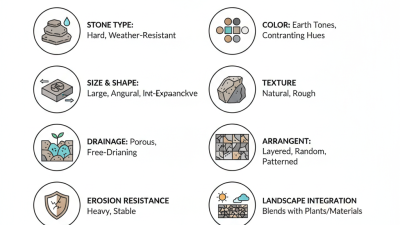
Gabion performance begins with the fit between stone and mesh. Choose durable, angular rock that stays larger than the mesh aperture, including after handling and settling. A practical specification should state both the minimum and maximum stone sizes, not just an average. This limits gaps and makes filling more consistent. Fit matters.
Then consider the loads and site conditions. For a retaining structure, larger, well-graded stones can help create a dense fill, but they must still pass through the basket opening. Near fast-moving water, check the risk of stone movement and abrasion. On exposed slopes, smaller pieces may work into voids or press against the mesh. The right choice depends on basket dimensions, mesh type, and the design loads. A detail that works on one site may fail on another.
Before ordering, compare the proposed rock grading with the mesh aperture and the project engineer’s specifications. Ask the quarry for a grading range, and inspect sample stones for cracks or weak layers. During filling, avoid forcing oversized rocks into corners; this can distort the mesh. I would also recheck the specification after a trial basket is filled. It is easy to assume a stated stone size tells the whole story. It does not. Real stone varies, and site handling can expose that gap.
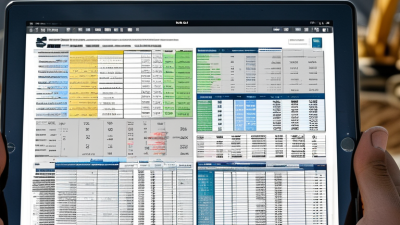
Practical stone-fill guidance by nominal mesh opening. Confirm basket dimensions, wire specifications, exposure conditions and project design requirements before ordering.
| Nominal Mesh Aperture | Suggested Stone Size | Typical Fill Characteristics | Common Applications | Load and Site Considerations | Selection Checks |
|---|---|---|---|---|---|
| 60 × 80 mm | Approximately 80–150 mm; all pieces should be larger than the mesh opening. | Hard, durable, angular or well-shaped rock; use a consistent grading that limits voids and prevents stones escaping through the mesh. | Smaller gabion units, landscape walls, channel details and applications where a finer stone appearance is desired. | Smaller openings do not by themselves make a basket suitable for higher loads. Check wall geometry, foundation support, water pressure and design loads. | Check the actual clear opening and stone grading. Avoid relying on a nominal stone label alone; measure the smallest dimension of irregular pieces. |
| 80 × 100 mm | Approximately 100–200 mm; select pieces that cannot pass through the openings. | Well-graded, sound rock with enough larger pieces to maintain retention and smaller pieces to reduce excessive voids. | Common retaining-wall baskets, riverbank protection, drainage works and general erosion-control applications. | For flowing water, consider flow velocity, abrasion, scour and the risk of stone movement. Wall stability depends on the complete design, not fill size alone. | Verify aperture orientation, coating and wire details with the basket specification. Use a compatible stone grading across all compartments. |
| 100 × 120 mm | Approximately 120–250 mm; keep the smallest stone dimension greater than the opening. | Coarse, durable rock suited to larger mesh; hand placement of visible face stones can improve appearance and reduce surface voids. | Larger retaining structures, heavy-duty bank protection and projects using larger basket units. | Assess overturning, sliding, bearing capacity, settlement, water levels and scour where relevant. These checks require project-specific engineering. | Do not assume that larger stones increase structural capacity on their own. Confirm basket size, diaphragm spacing and fill placement requirements. |
| 120 × 150 mm | Approximately 150–300 mm; use stones too large to escape through the mesh. | Large, robust pieces with a suitable grading; very oversized stones can be difficult to place evenly and may leave large voids. | Selected large-unit applications where the basket specification permits this aperture and matching stone supply is available. | For exposed or high-energy sites, evaluate hydraulic forces, impact, abrasion and foundation conditions. Obtain a design review for critical works. | Check that the opening and stone dimensions are compatible with the specified basket and installation method. Confirm local stone availability and transport limits. |
Important: Stone-size ranges are practical selection guidance, not a substitute for a project specification. Use durable, non-degradable rock; exclude soil, clay and weak or weathered pieces. The smallest stone dimension should exceed the actual mesh opening so fill is retained. Gabion performance also depends on wire and coating specifications, basket geometry, installation quality, foundation conditions and site loads. Have retaining and hydraulic structures checked by a qualified engineer.
For 2026 procurement, compare the actual requirements behind “compliant,” not just a supplier’s checklist. EN 10223-3 covers steel wire mesh products for civil engineering, including gabions. ASTM A975 addresses double-twisted hexagonal mesh gabions and revet mattresses. Both help buyers specify mesh, wire, coatings, and verification, but neither replaces project-specific design checks.
Check the opening size, wire diameter, coating type, and stated tolerances against the tender documents. Common nominal mesh openings include 60 × 80 mm and 80 × 100 mm; confirm the applicable standard edition and schedule before ordering. Ask for batch-linked test certificates and coating records, not a generic declaration. Small details matter. A zinc-aluminium coating and a polymer-coated wire are not interchangeable without confirming the exposure conditions and project specification.
For site performance, the Federal Highway Administration’s HEC-23 report discusses gabions and mattresses among streambank and scour countermeasures. It reinforces the need to match protection to flow, foundation, and installation conditions—not merely to a catalogue description. Inspect sample panels for consistent twists and measure several openings with a simple gauge. One awkward reality: paperwork may be tidy while field workmanship varies. Record that gap, and resolve it before shipment or installation.
Get a personalized quote tailored to your project needs. Request a quote today and let us help you build with passion.
Looking for a concrete contractor you can trust? Fill out the form below to get our recommendations sent to your inbox.