Planning a concrete project often begins with a simple question: how much cement will the work require? A cement estimate calculator can provide a useful starting point for slabs, footings, paths, and small repairs. However, reliable results depend on accurate measurements, suitable mix information, and realistic allowance for waste.
Small errors become expensive.
This guide presents seven practical tips for using a cement estimate calculator with greater confidence. You will learn how to measure length, width, and depth consistently, select the correct units, and review the calculator’s assumptions. A patio measuring 4 metres by 3 metres may appear straightforward, yet a small depth difference can change the required volume considerably. Converting inches, feet, metres, or millimetres incorrectly can create an unreliable order.
The calculator is only as dependable as its input.
Experienced builders usually check the result against project drawings, supplier guidance, and local material specifications. They may also allow extra material for uneven ground, spillage, formwork loss, or a slightly rough surface. The right allowance varies by project, so copying a fixed percentage without thinking can be misleading. Cement is also only one part of a concrete mix; sand, aggregate, water, and the specified strength affect the final quantity.
I have found that calculator results need a second look.
These tips focus on practical checking rather than blind trust. They can help homeowners, contractors, and project managers reduce avoidable waste while recognising when an engineer or qualified supplier should review the estimate. A careful estimate saves money, but it cannot correct poor measurements or unclear specifications.
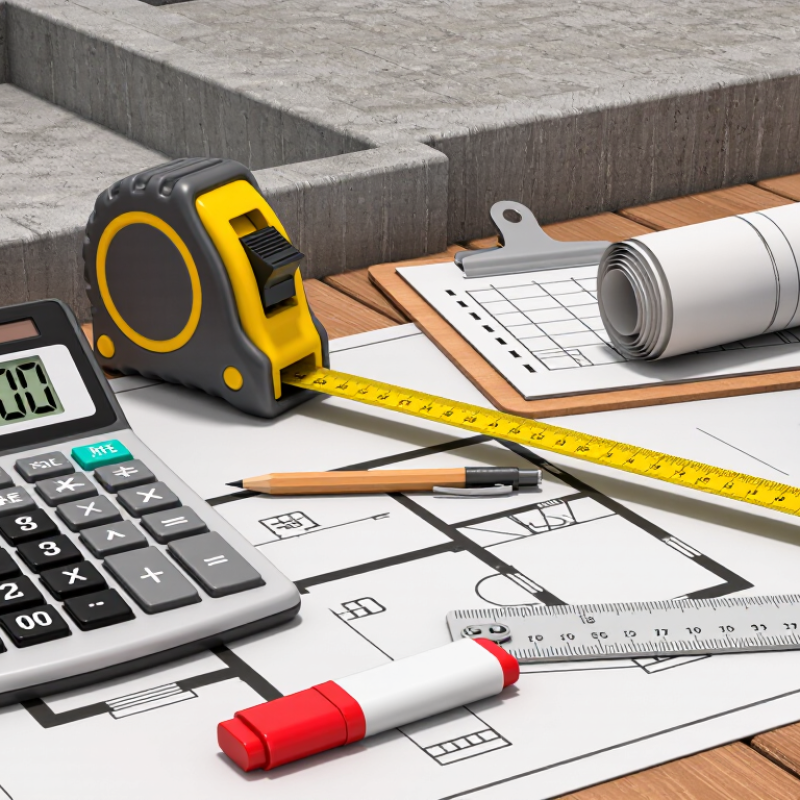
Before opening a cement estimate calculator, define the project scope clearly.
Identify the structure, dimensions, thickness, and required mix type. A patio slab, fence footing, and block wall need different calculations. Measure the length and width on site, then confirm the depth at several points. Ground conditions can change the volume.
Write every measurement down.
I have seen estimates fail because one depth was copied incorrectly. Include openings, edges, steps, and uneven sections.
Decide whether you need cement only, or a complete concrete and aggregate estimate. Then select a calculator designed for that task.
A concrete slab calculator usually uses length, width, and thickness. A mortar calculator may require wall area, joint size, and block dimensions. Check the calculator’s units before entering data. Mixing metres with millimetres can create a costly error.
Add a practical waste allowance, often around five to ten percent, but adjust it for difficult access or irregular shapes.
Compare the result with project drawings and supplier guidance. For structural work, ask a qualified professional to review the mix and quantity.
Calculator results are useful, not infallible. A second measurement may expose the first mistake.
7 Tips for Using a Cement Estimate Calculator
Gather Accurate Measurements for the Construction Area
Accurate measurements make a cement estimate calculator useful. Begin by measuring the area’s length, width, and required thickness. Record every value immediately. Small errors can multiply across a large slab.
Measure at several points, especially where the ground looks uneven. Construction areas rarely behave like perfect rectangles. Divide irregular spaces into smaller sections, then calculate each section separately. Include footings, steps, edges, and narrow strips that are easy to overlook. Openings for drains or posts should be measured and deducted carefully.
Use one unit system throughout the calculation. Mixing millimetres, metres, and feet creates avoidable mistakes. Check the thickness near corners and along the centre. A sloping base may need different readings. Use the deepest practical measurement when the surface cannot be levelled.
Measure twice.
I once measured a small walkway from one end only. The soil dipped near the gate, and the final material estimate was short. That mistake taught me to inspect the entire site, not just the visible surface. Take clear notes, label each section, and photograph difficult areas for later review.
Add a modest allowance for handling loss and uneven conditions. Avoid excessive extra material, since it can increase cost and storage problems. Review the calculator’s result against your measurements before ordering. When the shape or ground conditions seem uncertain, ask a qualified construction professional to verify the figures.
A cement estimate calculator is only as reliable as its material inputs. Begin by selecting the correct mix type for the project, such as general-purpose concrete, high-strength concrete, or a repair mix. Check the required strength, exposure conditions, and placement method before entering any values. Small errors matter.
Measure the slab length, width, and depth in consistent units. Then add openings, waste, and uneven ground conditions. For material parameters, confirm cement content, aggregate size, water-cement ratio, and expected moisture in sand. Wet sand can quietly change the water balance. Use tested specifications from a qualified supplier or project engineer, not a convenient guess. Local construction standards should guide the final selection.
Review the calculator’s output against practical site experience. A narrow footing may need different aggregate than a thick foundation. Pumped concrete may require different workability than hand-placed concrete. Do not treat the result as an exact order quantity; field losses, spillage, and batch tolerances are real. I have seen estimates fail because a calculator assumed dry aggregate during rainy weather. Recheck the volume and mix assumptions before ordering. Keep a small, justified allowance, but avoid excessive cement, which can increase cost, shrinkage, and cracking. A second review is worthwhile.
A cement estimate calculator is useful only when its inputs reflect real site conditions. Enter the slab length, width, and thickness in the same unit system. A small unit error can multiply the result dramatically. The U.S. Geological Survey reported approximately 4.1 billion metric tons of cement production worldwide in 2023. That scale shows why careful measurement matters. Even a minor estimating mistake can become expensive across repeated pours.
Tip: Measure twice, then enter the values slowly. Record openings, steps, thickened edges, and irregular ground separately. Do not guess the thickness from a visual inspection. Use drawings, a laser level, or several physical measurements. ACI 301-20 highlights the importance of controlled concrete production and documented requirements. The calculator cannot correct poor field data. I have found that tidy numbers sometimes hide uneven subgrade conditions.
Tip: Review the estimated quantity before ordering. Check the calculated volume manually: length multiplied by width multiplied by thickness. Confirm whether the calculator expects cement only, or a complete concrete volume. Then compare the result with the mix design and supplier guidance. The Global Cement and Concrete Association reports that concrete use exceeds 14 billion cubic metres annually, making consistent estimation essential. Add a reasonable allowance for spillage, form movement, and difficult access, but do not apply an automatic percentage without explanation. Too little material can stop a pour. Too much creates waste. A second review is worth the few minutes.
| Tip | Data Dimension | Example Entry | Calculation or Practical Check | Expected Result |
|---|---|---|---|---|
| 1Measure the full length and width | Slab or footing dimensions | Length: 4.00 m Width: 3.00 m |
Plan area = length × width | 12.00 m² Check that measurements are taken from the same unit system. |
| 2Enter the correct thickness | Concrete thickness | 0.10 m (100 mm) |
Wet concrete volume = area × thickness 12.00 m² × 0.10 m |
1.20 m³ Do not enter 100 as the thickness unless the calculator specifically requests millimetres. |
| 3Confirm the mix proportion | Nominal cement:sand:coarse aggregate ratio | 1:2:4 Seven total parts |
Cement fraction = 1 ÷ (1 + 2 + 4) | 1/7 of the dry-material volume Use the specified mix design when structural requirements apply. |
| 4Account for dry-volume conversion | Dry-material conversion factor | 1.54 | Dry-material volume = wet concrete volume × 1.54 1.20 m³ × 1.54 |
1.848 m³ The factor allows for voids and volume changes among dry ingredients. |
| 5Check the cement quantity in kilograms | Cement density and cement fraction | Bulk density: 1,440 kg/m³ Cement fraction: 1/7 |
Cement mass = 1.848 × (1/7) × 1,440 | Approximately 380 kg Round only after completing the calculation. |
| 6Add a reasonable waste allowance | Waste and handling allowance | 5% | Adjusted cement = 380 kg × 1.05 | Approximately 399 kg Actual waste depends on site access, spillage, storage, and batching accuracy. |
| 7Review the final bag count | Bag size and purchasing quantity | 50 kg per bag | Required bags = 399 kg ÷ 50 kg Always round up to a whole bag. |
8 bags Review the result against the calculated volume, mix ratio, thickness, and waste allowance before purchasing. |
Reference calculation: For a 4.00 m × 3.00 m slab with a 0.10 m thickness, a 1:2:4 nominal mix, a dry-volume factor of 1.54, a cement bulk density of 1,440 kg/m³, and a 5% allowance, the estimated requirement is approximately 399 kg of cement, or 8 bags at 50 kg per bag.
7 Tips for Using a Cement Estimate Calculator
Adjust the Estimate for Waste, Site Conditions, and Practical Needs
A cement estimate calculator gives a useful starting point, not a guaranteed order quantity. Confirm length, width, and depth at several points. Uneven ground can quietly increase volume. For normal-weight concrete, industry references commonly use about 145–150 pounds per cubic foot. However, the actual mix density may differ.
Check the calculator’s units before entering measurements. Feet, inches, and meters can create serious errors. Use the measured average depth, not the planned depth alone. Add extra material for irregular edges, form movement, spillage, and pump-line residue. A 5–10% allowance is often practical, but poor access or unstable soil may require more. Do not guess blindly.
Site conditions matter most. Inspect soft subgrade, sloped areas, thickened edges, and difficult delivery routes. WRAP construction guidance has identified material waste as a significant site-management issue, while the U.S. EPA estimated 600 million tons of construction and demolition debris in 2018. Small estimating mistakes can become expensive waste. Keep a written measurement record. Recheck it with the crew. Calculator output can look precise. It may still be wrong. Order quantities should also consider supplier minimums, weather delays, placement speed, and the mix design required by the engineer.
Get a personalized quote tailored to your project needs. Request a quote today and let us help you build with passion.
Looking for a concrete contractor you can trust? Fill out the form below to get our recommendations sent to your inbox.