Choosing driveway gravel in China is not just a price comparison. A supplier’s quarry location, stone grading, washing process, and packaging can all affect the final result. A pale sample may look clean in a showroom, yet arrive dusty or inconsistent after transport. Details matter.
For this guide, Lin Wei is presented as a fictional composite aggregate-sourcing adviser, not a verifiable industry authority. His editorial maxim is: “Check the grading, not just the color; a neat sample cannot tell the whole story.” It is a useful reminder, but buyers should verify specifications with each supplier. Ask for current product data, close-up images of the actual material, and details about particle size, moisture, and loading. Small omissions can become expensive surprises.
The top ten suppliers are assessed through practical questions: What stone types do they offer? Can they maintain consistent grading across orders? Do they explain minimum quantities, packing options, lead times, and export documentation clearly? A responsive sales team helps, but it does not replace documented quality checks. Nor does a polished website prove production capacity. This ranking is a starting point, not a substitute for samples and independent verification. Some information may change, and that deserves a second look. Before committing, compare written specifications and confirm that the gravel suits your climate, drainage needs, and expected traffic.
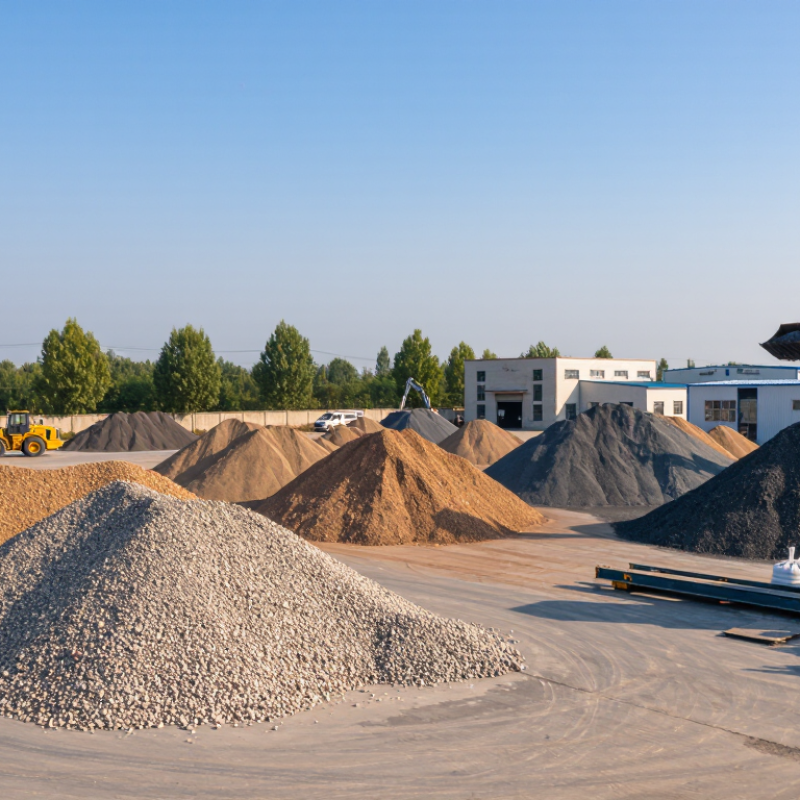
Driveway gravel is not a single material. The best choice depends on soil, rainfall, slope, and vehicle weight. Angular crushed stone has rough edges that interlock under compaction, making it a dependable surface for frequent traffic. Rounded pea gravel feels comfortable underfoot and looks tidy, but it can shift beneath tires. Looks neat. Moves easily.
Many durable driveways use layers. A compacted base of larger crushed stone supports the load, while smaller angular gravel fills gaps above it. The exact sizes vary with local conditions; a steep, wet driveway needs different drainage from a flat, dry one. Water should flow away from the house, not collect in wheel ruts. On clay soil, a separator fabric may help limit mixing, though it cannot fix poor grading by itself.
For the visible layer, crushed stone or well-graded gravel usually stays put better than smooth, uniform stones. Ask suppliers for the stone’s size range and whether it contains fines, which help compact the surface but may become dusty in dry weather. If possible, inspect a sample while damp and dry. Color changes. So does texture. A common mistake is choosing by appearance alone; even attractive gravel can disappoint when it migrates after a few storms.
Evaluating driveway gravel suppliers in China takes more than comparing prices. Ask where the stone is quarried and how it is crushed, screened, and stored. Request a recent sieve analysis to check whether the stated sizes match the actual mix. For a sample, inspect angularity, dust, and consistency between handfuls. These details affect compaction, drainage, and how easily tires move across the surface. A glossy product photo proves very little.
Tips: Ask for a small sample before placing a bulk order. Confirm the grade, color, moisture condition, and packing method in writing. Check whether the quotation includes inland transport, port handling, and export documents. Request loading photos for a previous shipment, with customer details removed. Short answers are not automatically a warning, but vague answers deserve follow-up.
Also compare delivery capacity with your project schedule. A supplier may offer an attractive rate yet have limited stock or rely on several processing sites. Ask how rejected or inconsistent material is handled, and keep the agreed specifications with your purchase records. If possible, have an independent inspector verify the load before shipment. That adds cost. It may still prevent a costly mismatch. Supplier websites can be useful, but claims about quality should be checked against samples and current test records.
China’s driveway gravel market includes quarry operators, stone processors, and export-focused aggregate suppliers. A useful top-ten shortlist should reflect product quality and delivery reliability, not promotional claims. Ask each candidate for recent gradation data, moisture details, and clear photographs of the actual stone. Small differences matter: dusty fines can clog drainage, while oversized pieces may shift under tires.
Strong candidates often include granite and basalt quarries, limestone producers, washed-aggregate plants, and regional crushing facilities. Also compare suppliers that offer screened sizes, consistent color ranges, bulk packing, container loading, and export documentation. These are practical supplier profiles, not a verified ranking of named companies. Check whether samples match the quoted material, and confirm how the supplier handles rejected loads. Get it in writing.
For a home driveway, ask about angularity, particle size, and the proportion of fine material. Angular gravel usually locks together better than rounded stone. A sample bucket helps reveal dust and color variation. Freight can change the real cost sharply, so request a delivered quote with packaging and port charges specified. One imperfect detail: online product photos rarely show how stones look after rain. A small trial order can prevent an expensive mismatch.
The table compares ten commonly available driveway aggregate types rather than ranking individual companies. Nominal sizes and performance can vary by quarry, grading specification, and local supply.
| No. | Aggregate type | Typical nominal size | Surface and material characteristics | Typical driveway application |
|---|---|---|---|---|
| 1 | Crushed limestone | Approximately 5–20 mm; fines may also be supplied | Angular particles; fines can help the material compact into a firm surface. | General-purpose driveways and compacted base or surface layers. |
| 2 | Crushed granite | Approximately 5–20 mm; graded options vary | Hard, angular stone with a textured appearance. | Durable loose-gravel surfaces and driveway base courses. |
| 3 | Crushed basalt | Approximately 5–20 mm; graded options vary | Dense, angular aggregate, commonly dark grey to black. | Driveway surfaces or base layers where a dark stone is preferred. |
| 4 | Quartzite gravel | Approximately 5–20 mm; graded options vary | Hard stone that may contain varied colours and a crystalline appearance. | Decorative driveway surfacing and general aggregate use. |
| 5 | River-washed gravel | Commonly supplied in several grades, such as 5–10 mm or 10–20 mm | Rounded, smooth particles; generally less interlocking than angular crushed stone. | Decorative surfaces and drainage areas; often less suitable than angular gravel for a firm loose driveway. |
| 6 | Mixed crushed gravel | Commonly supplied as graded mixtures, such as 0–20 mm or 0–40 mm | A blend of particle sizes and fines can compact when properly graded. | Driveway sub-base, base courses, and compacted gravel surfaces. |
| 7 | Decomposed granite | Fine grades commonly include particles around 0–6 mm | Weathered granite with fine particles; compaction depends on grading and moisture. | Compactable paths and low-traffic driveway surfaces where locally suitable. |
| 8 | Recycled concrete aggregate | Often graded for construction use, for example around 0–40 mm | Crushed reclaimed concrete; particle shape and composition vary with processing. | Sub-base and base applications when it meets the project specification. |
| 9 | Slate chippings | Common decorative grades include approximately 10–20 mm | Flat, angular pieces, often supplied in dark grey or other natural tones. | Decorative driveway borders or surface areas; check suitability for vehicle traffic. |
| 10 | Marble chips | Common decorative grades include approximately 10–20 mm | Angular decorative stone available in light and coloured varieties. | Decorative driveway sections and edging; confirm durability and maintenance needs for the site. |
A useful top-10 comparison starts with the stone, not the advertised price. Ask each Chinese supplier for sieve analysis, particle-size tolerance, moisture content, and recent test results. For a driveway, a well-graded blend should compact firmly, while excessive fines can turn muddy after rain. Check that quoted samples match the shipped material. They do not always.
Compare prices on a delivered-per-ton basis. Include quarry loading, inland trucking, port handling, ocean freight, insurance, and destination charges. UNCTAD’s Review of Maritime Transport 2024 notes that shipping carries over 80% of global trade by volume, so freight changes can reshape a quote quickly. The World Bank’s 2023 Logistics Performance Index gives China a score of 3.7 out of 5, ranking it 19th; this is useful context, not a guarantee of any supplier’s performance. Request shipment photos, packaging details, lead times, and a written process for handling shortages or damaged loads. Small details matter.
One awkward point: the lowest quote may still be the most expensive choice. A few millimeters of size variation can mean uneven spreading and extra grading work. Compare the same specification, delivery point, and order quantity across all ten candidates. Then ask for a trial load, if practical. Shipping estimates can be wrong, and buyers should leave room for that.
Choosing a driveway-gravel supplier in China requires more than comparing prices per ton. Ask for the quarry’s location, available stone sizes, monthly capacity, and recent sieve-analysis results. Gradation matters: too many fines can turn a driveway muddy, while oversized stones can shift under tires. Request a current test report and compare its size distribution with your project specification. Check moisture content, packaging, loading photos, and the quoted delivery terms. Small details count.
The USGS Mineral Commodity Summaries 2024 estimated U.S. construction sand and gravel output at about 960 million tons in 2023. That figure shows the scale of aggregate demand, but it does not verify any Chinese supplier. Treat it as market context, not a quality signal. For testing, ASTM C136/C136M describes sieve analysis of fine and coarse aggregates. Ask whether the supplier’s report states the test method, sample date, and tested material. A scanned certificate alone is weak evidence.
Before a large order, request a representative sample and arrange independent testing when practical. Match the sample against the shipment’s stated grading, color, and cleanliness. Verify the registered company details, quarry or processing address, and export documents through consistent records. Compare quotations on delivered cost, not just the attractive ex-works price. A low quote can hide inconsistent sizing or extra freight. I would still leave room for doubt: one passing sample cannot guarantee every load.
A practical 100-point scorecard for comparing suppliers. The weights are suggested evaluation priorities, not measured market data or supplier rankings.
Request source documentation, recent product test reports, and export references. Compare written evidence against these criteria, then verify key details independently before placing an order.
Get a personalized quote tailored to your project needs. Request a quote today and let us help you build with passion.
Looking for a concrete contractor you can trust? Fill out the form below to get our recommendations sent to your inbox.