
Why Is Driveway Stone the Best Choice?
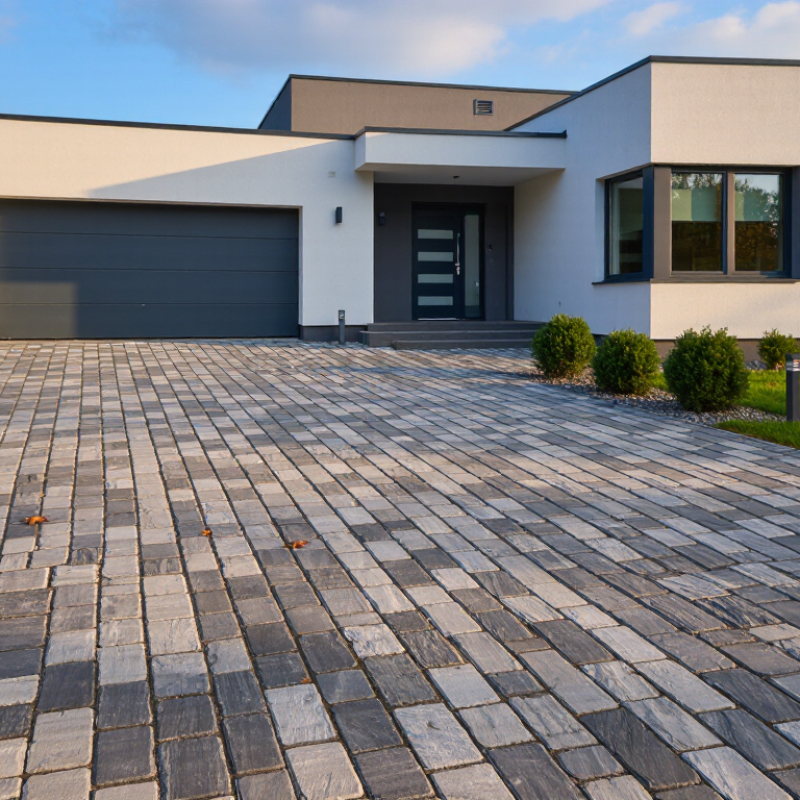
A driveway does more than lead to a garage. It frames the front of a home, carries daily traffic, and faces rain, frost, heat, and falling leaves. Driveway stone offers a natural surface with texture and color that can suit both traditional cottages and modern homes. Its character comes from real variation: a charcoal chip beside a pale gray one, or a rough edge catching the afternoon light. That variation is attractive, though it can make an exact color match difficult.
For a transparent trade perspective, Mason Reed is a fictional composite driveway-stone specialist, not a cited source. His illustrative line is: “Choose stone for the ground you have, not just the sample you like.” It captures a practical point. Soil, slope, drainage, stone size, and installation quality all affect how a driveway performs. A small sample may look tidy on a counter but feel different across a broad, sunlit entrance. And stone is not maintenance-free. Loose material can shift, weeds may appear, and edges need attention. Those details deserve honest consideration. This guide explores driveway stone’s durability, appearance, upkeep, and costs, while noting where another surface may suit a property better.
What Driveway Stone Is and How It Is Used
Driveway stone is loose aggregate, usually crushed rock or gravel, spread in compacted layers to create a drivable surface. Unlike smooth, rounded pea gravel, angular crushed stone has edges that lock together under traffic. Larger stones often form the base, with smaller aggregate on top. The right grading depends on soil, slope, and vehicle weight. Installation typically involves removing soft topsoil, shaping a slight crown or drainage fall, then compacting a firm base. The surface layer is spread and compacted afterward. It sounds simple. It isn’t always.
Stone can cover a full driveway, a parking pad, or an approach to a garage. A geotextile separator may help keep aggregate from sinking into weak, wet soil. It cannot replace proper drainage or a well-built base. Edge restraints help limit spreading, while occasional raking and fresh stone can repair ruts from turning tires or heavy rain. Details matter. The right material depends on site conditions and local availability, not just color or price. A driveway that looks neat on day one may still struggle if water has nowhere to go. That part is easy to overlook. Check the grade and soil before ordering; otherwise, even good stone may become a maintenance headache.
Why Is Driveway Stone the Best Choice? - What Driveway Stone Is and How It Is Used
| Stone Type | Typical Size or Form | Common Driveway Use | Practical Benefits | Things to Consider |
|---|---|---|---|---|
| Crushed angular gravel | Often sold as a graded blend, such as ¾-inch stone with smaller particles and fines | Base layer or finished surface for many residential driveways | Angular pieces interlock when compacted, helping form a relatively stable surface | Blends containing fines may drain less freely than clean, single-sized stone; grading and compaction matter |
| Pea gravel | Small, rounded particles, commonly around ⅜–⅝ inch | Decorative top layer, usually over a properly prepared base | Rounded stones allow water to pass through the surface and create a softer appearance | Rounded particles do not lock together as well as angular stone and may shift under tires or foot traffic |
| Decomposed granite | Fine, weathered granite particles, often sold with a range of particle sizes | Light-duty driveways, edging areas, and decorative surfaces | Fine particles can compact into a smoother surface than loose, coarse gravel | May erode or create dust depending on grading, weather, slope, and maintenance; edging can help contain it |
| Crushed limestone | Available in several graded sizes, from coarse aggregate to blends with fines | Driveway base or surface, where locally available and suitable | Angular fragments can compact together; graded blends are commonly used in aggregate construction | Performance and appearance vary by local source; confirm the product size and drainage needs before ordering |
| Clean, coarse crushed stone | Larger, relatively uniform pieces with few or no fines | Drainage layer or part of a layered driveway section | Open spaces between particles allow water to move through more readily | The open surface can feel rough and may not provide a firm finish on its own; it is often covered with a finer layer |
How driveway stone is used: Stone is commonly placed in prepared layers over a shaped, compacted subgrade. Coarser aggregate may provide drainage or structural support, while a smaller, well-graded layer can form the driving surface. The appropriate material and depth depend on soil, climate, drainage, vehicle loads, and local practice; a site-specific design may be needed.
Related Posts
-
How to Choose the Best Driveway Stone?
-

Best Driveway Stone Options for Your Needs?
-
“10 Essential Tips for Choosing the Best Driveway Gravel for Your Home”
-

Why You Need a Concrete Footing Calculator for Your Next Construction Project?
-

How to Use a Cement Needed Calculator in 2026?
-

10 Best Concrete Mesh Manufacturers Worldwide?