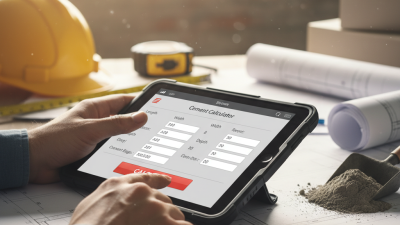
Why Use a Cement Estimate Calculator for Bulk Orders?

Bulk cement orders leave little room for guesswork. A missed pallet can delay concrete pours, while excess bags occupy valuable, moisture-sensitive storage. A cement estimate calculator gives purchasing teams a clearer starting point. It combines area, thickness, mix ratio, waste allowance, and packaging units before a supplier receives the order.

The scale is significant. The U.S. Geological Survey reported approximately 95 million metric tons of Portland cement and masonry cement shipments in the United States during 2023. The Global Cement and Concrete Association also identifies concrete as the most widely used manufactured material worldwide. Small estimating errors therefore become expensive when repeated across large projects. One extra percentage point can mean hundreds of unnecessary bags.

Quantity-surveying expert Glenn Mathewson has often emphasized the practical discipline behind material takeoffs: “Measure twice, order once.” That advice is simple, but still useful. A calculator does not replace drawings, site experience, or supplier confirmation. It supports them.

Real conditions are messier. Sloped ground, uneven formwork, damaged packaging, and changing moisture levels can distort the result. Use a cement estimate calculator, then review its assumptions with a qualified estimator. Check the bag weight. Confirm the mix design. Recalculate before payment.

Reliable bulk ordering is not about chasing a perfect number. It is about creating a traceable estimate, exposing uncertainty, and making better decisions before trucks arrive.

Why Use a Cement Estimate Calculator for Bulk Orders?

What Is a Cement Estimate Calculator for Bulk Orders?

A cement estimate calculator for bulk orders is a planning tool that converts project measurements into a practical material quantity.

It usually considers slab length, width, depth, cement content, bag weight, and expected waste. Some calculators also estimate truckloads and delivery timing. In a real pour, a small depth error matters.

A 10-centimeter slab across 500 square meters requires about 50 cubic meters of concrete.

That is not a minor adjustment.

The International Energy Agency reported in 2023 that cement production contributes about 7% of global energy-related and process CO2 emissions. Accurate ordering therefore supports both cost control and responsible material use.

A calculator can reduce over-ordering, unused bags, and rushed replacement deliveries. It can also expose weak assumptions.

Is the measured depth consistent?

Is the mix design confirmed?

Has ground settlement been considered?

A useful calculator should show its formula, units, and waste allowance. For example, adding five percent waste to a 20-ton cement requirement produces 21 tons. That figure is easy to check before placing a bulk order.

Still, the result is only an estimate. Moisture, site access, packaging loss, and supplier tolerances can change the final quantity.

I have found that calculators are most reliable when a site supervisor reviews the inputs. Technology helps. Human judgment remains necessary.

How to Enter Project Details and Cement Requirements

For bulk cement orders, a calculator is useful only when the project details are accurate. Enter the slab length, width, and planned thickness in consistent units. A small unit mistake can distort the entire estimate. Add openings, waste allowances, and separate pours rather than combining everything quickly. For a foundation, record footing dimensions independently from wall dimensions. This creates a clearer material picture and makes supplier discussions more reliable. In my experience, measuring twice is cheaper than correcting a short delivery.

Cement requirements should reflect the concrete mix, not just the visible construction area. Enter the required mix ratio, aggregate condition, and target strength when the calculator requests them. If the project uses different mixes, calculate each section separately. Include curing conditions and expected placement time where relevant, because these affect practical planning. The result is an estimate, not a guarantee. Site moisture, uneven ground, and handling losses may change actual consumption. I have sometimes treated calculator output as exact, which was a poor assumption. A qualified site professional should review unusual structures or large-volume orders.

Tips: Keep a written measurement sheet beside you. Use meters or feet consistently. Check whether the calculator asks for cement alone or complete concrete volume. Add a realistic waste percentage, but do not hide uncertain measurements inside a large allowance. Compare the calculated quantity with drawings, delivery capacity, storage space, and the planned pour sequence. Save the inputs and date for later review. Small details matter.

How the Calculator Estimates Quantity, Weight, and Total Cost

A cement estimate calculator turns a bulk order into three practical figures: quantity, weight, and total cost. The process usually starts with volume. Enter the slab, footing, or column dimensions, then apply the selected mix ratio. The calculator converts the required volume into cement bags or tonnes. The Global Cement and Concrete Association reports that around 14 billion cubic metres of concrete are produced globally each year. Small calculation errors can therefore become expensive at project scale.

Weight depends on the cement unit selected. A bag-based estimate multiplies the required number of bags by each bag’s net weight. A bulk estimate uses tonnes, often with a conversion based on cement density. The calculator may also add a waste allowance, commonly between 5% and 10%. That allowance is practical, but not universal. Uneven ground, spillage, and moisture can change the real requirement. I still verify the result against the supplier’s technical data sheet.

Total cost combines cement quantity with the current unit price. Delivery charges, unloading distance, taxes, and minimum-order fees can change the final figure. The U.S. Geological Survey reported approximately 91 million metric tons of cement produced in the United States during 2023. This scale highlights why transport can materially affect bulk pricing. A reliable estimate should show each cost component separately. It should not hide assumptions behind one attractive total. That check takes minutes. It may prevent a costly second delivery.

Which Factors Affect Bulk Cement Calculations?

Bulk cement orders demand more than multiplying bags by a project area. A reliable cement estimate calculator combines volume, mix design, material density, and expected waste. This matters in a high-volume industry. The U.S. Geological Survey reported approximately 4.1 billion metric tons of cement production worldwide in 2023. Small calculation errors can therefore create major purchasing differences.

Several practical factors affect bulk cement calculations. Concrete strength requirements determine the cement-to-aggregate ratio. Moisture in sand and aggregate can change the required water content. Cement density also varies by product and storage conditions, so volume should not be treated as weight. Delivery losses, silo residue, and handling waste deserve a realistic allowance. Five percent may suit a controlled site, but difficult access can require more. Check the site.

The calculator should also account for batch size, placement method, and seasonal conditions. Cold weather may slow curing, while hot, dry weather can increase water loss. Industry guidance, including technical data from the International Energy Agency, links cement production with roughly seven to eight percent of global energy-related carbon dioxide emissions. Accurate ordering can reduce unused material and unnecessary transport, although the environmental benefit depends on actual site performance. Field experience still matters. A calculator cannot detect poor compaction, leaking formwork, or inaccurate measurements. Cross-check the result with a qualified technician, supplier documentation, and measured site quantities before confirming a bulk order.

How to Use the Estimate for Ordering and Delivery Planning

A cement estimate calculator helps turn project measurements into a practical ordering figure. For bulk orders, enter the slab length, width, and thickness carefully. Use consistent units. Add details for footings, columns, or steps if they are part of the pour. The result should show volume and, when available, estimated weight or bag quantity. It is only a starting point.

Before ordering, compare the calculated volume with the required mix design and supplier information. Cement density can vary, so volume alone may not confirm the final weight. Add a modest allowance for spillage, uneven ground, and measurement errors. Too much extra material increases storage problems and costs. Too little can interrupt a continuous pour. I have found that a second measurement often reveals a small but expensive mistake. Check access first.

Use the estimate to plan delivery timing, vehicle capacity, unloading space, and labor. Large orders may work better as staged deliveries, especially on narrow sites or in changing weather. Keep a clear record. Write down the calculator inputs, allowance percentage, approved quantity, and delivery dates. Share these figures with the site supervisor and supplier before confirming the order. If the calculator result seems unusually high or low, pause and check the units, thickness, and mix assumptions. That short review can prevent a delayed pour, although it cannot replace professional site assessment.